02 Haziran 2026 Salı
The online sessions held as part of the BAİBÜ İLEF-İG 2026 – 3rd International Communication, Artificial Intelligence and Hypermedia Symposium, organized by the Faculty of Communication at Bolu Abant İzzet Baysal University, continued with great interest on the third day, with intense participation in academic discussions. The session titled “Artificial Intelligence, Intelligence and Technological Infrastructures & Algorithmic Aesthetics, Design and Creativity,” which continued throughout the day, was moderated by Prof. Dr. Emre Tandırlı.
In this session, which addressed the effects of artificial intelligence on social life, cultural production, media practices, and creative industries in today's rapidly transforming communication technologies, researchers from different disciplines shared their current studies with the participants. The digital transformation process, extending from the alphabet to the algorithm, was comprehensively evaluated in the context of aesthetics, communication, design, diplomacy, music, telecommunications, and digital culture.
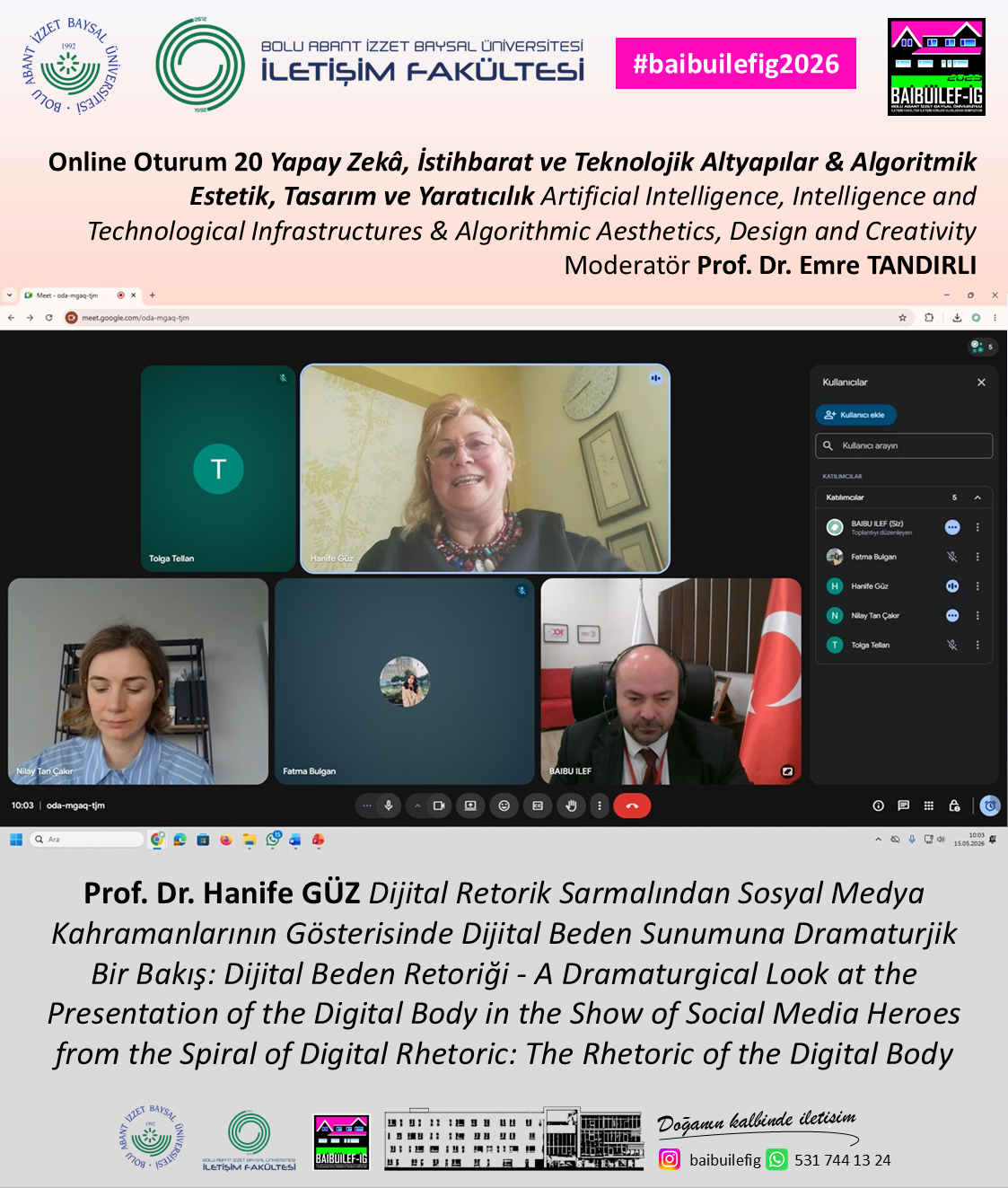
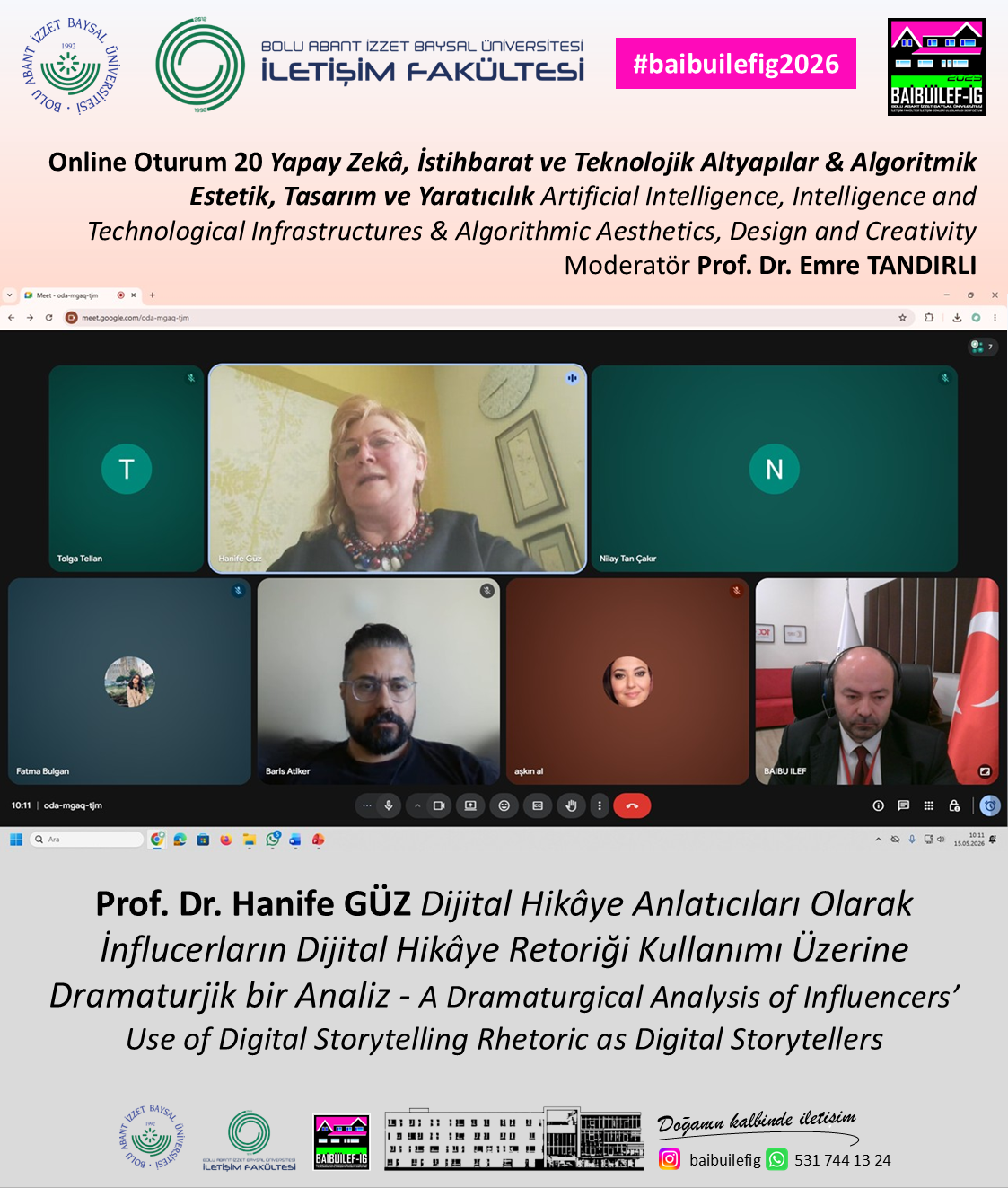
The session was opened by Prof. Dr. Hanife Güz, in her presentation titled “Digital Body Rhetoric,” addressed how digital environments reshape individuals' body perceptions and the role of body representations in online identity construction. In her second presentation, “Digital Storytelling Rhetoric of Influencers,” she evaluated the narrative strategies, persuasion processes, and digital storytelling constructs used by social media influencers and their impact on user behavior.
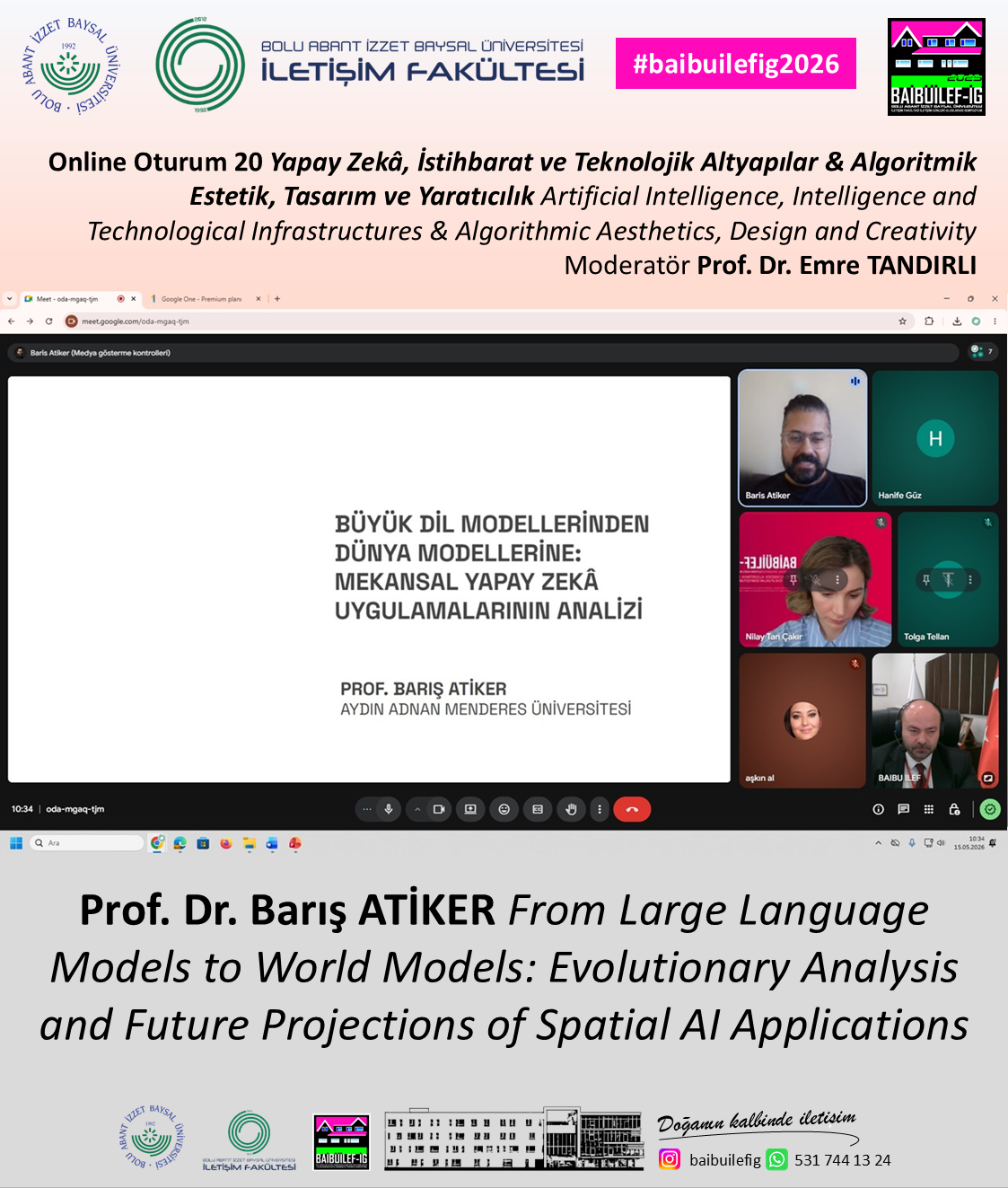
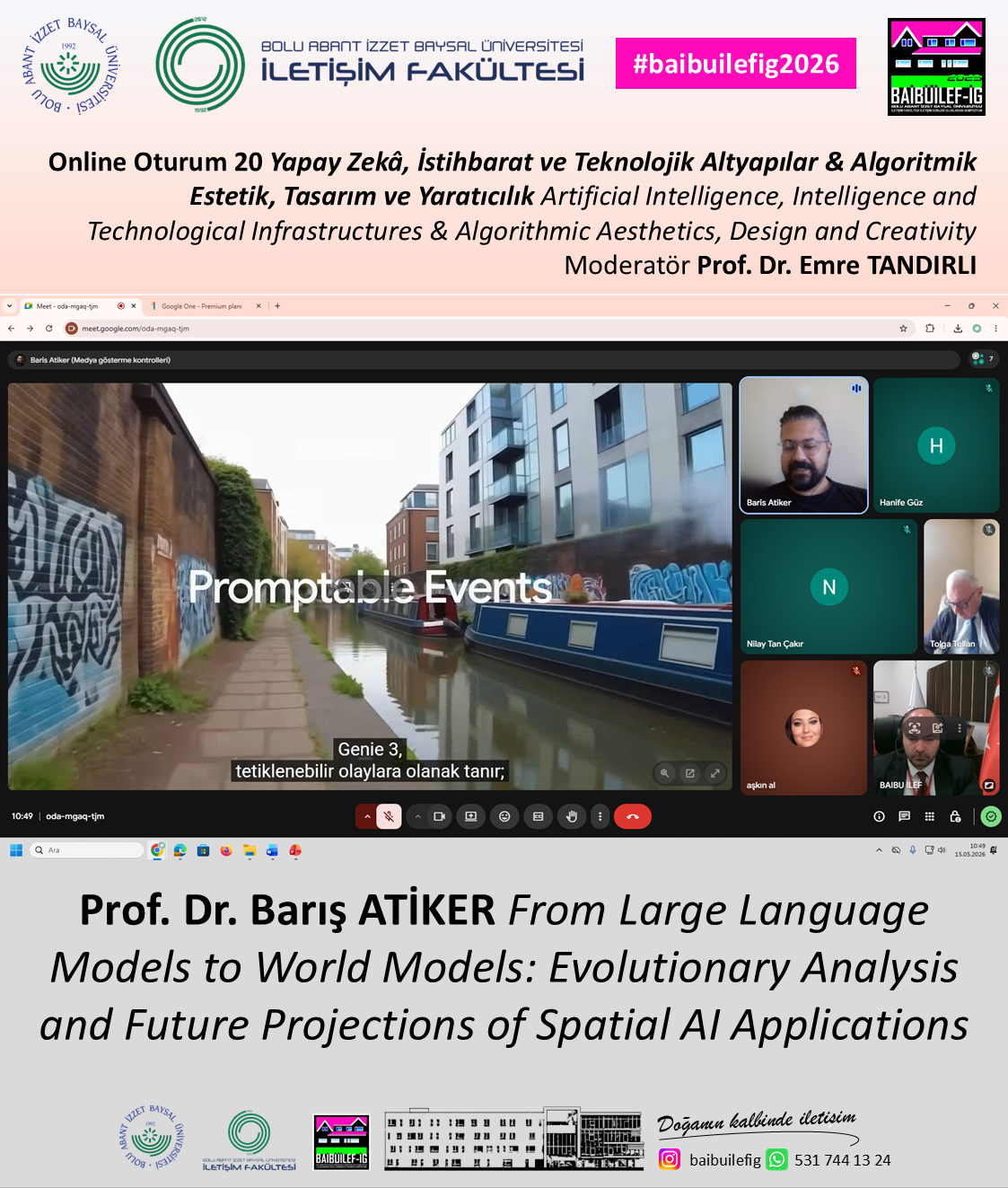
Prof. Dr. Barış Atiker's presentation, “Spatial AI Applications,” discussed current applications and future potential of spatial AI applications through examples. The possibilities offered by AI's capacity to perceive and interpret the physical environment were examined, particularly in terms of smart cities, augmented reality, and data-driven design processes.
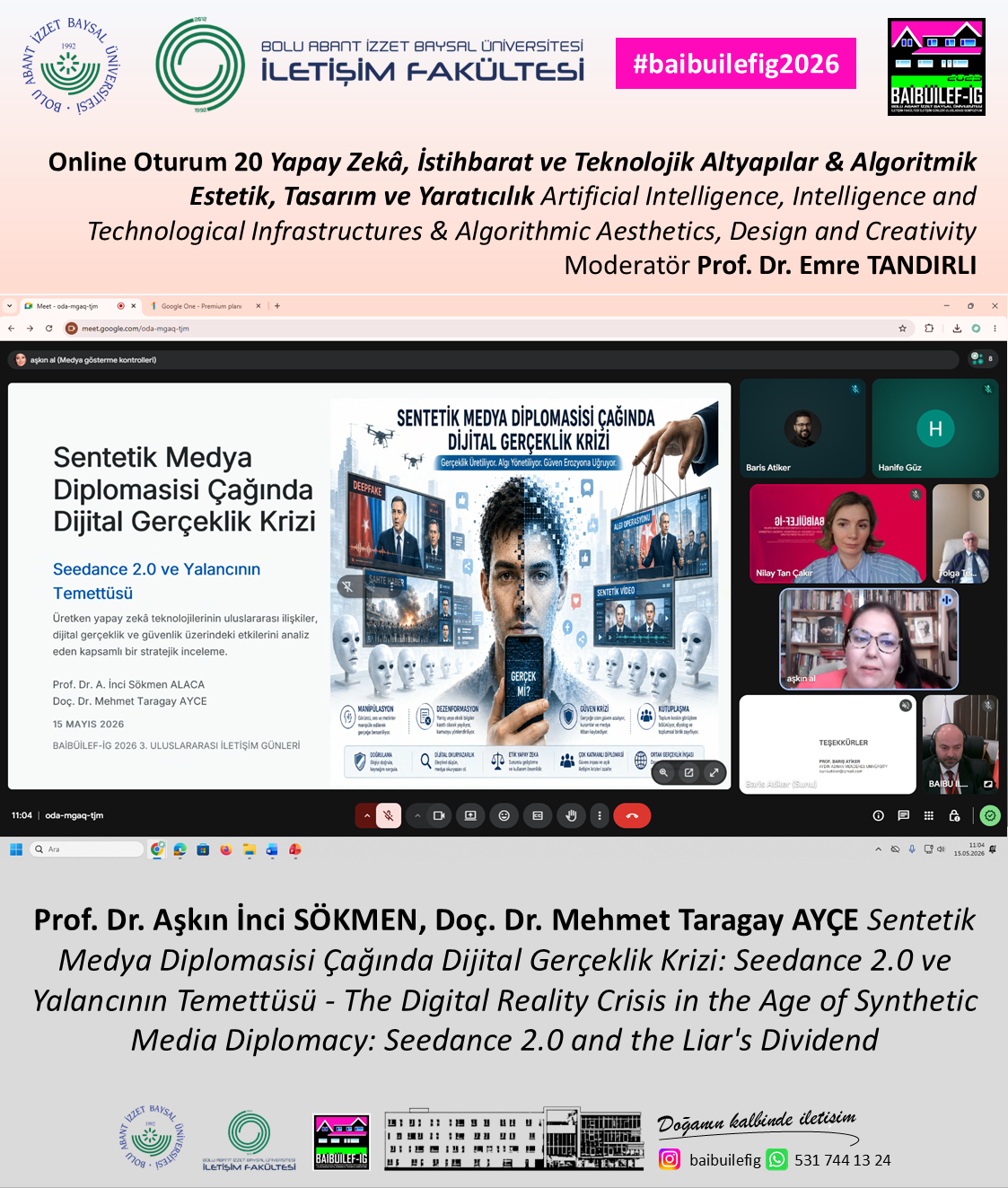
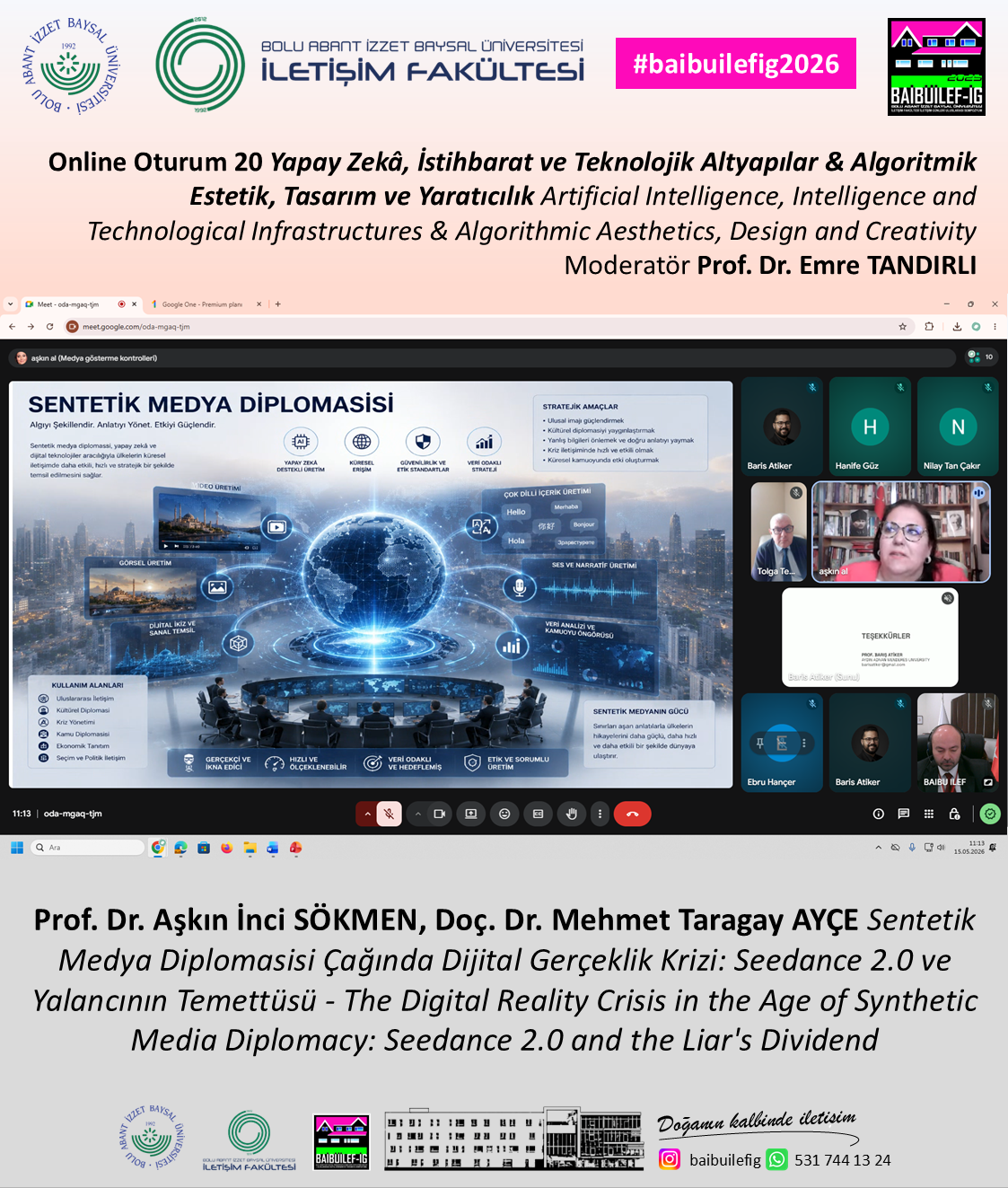
The study titled “Digital Reality Crisis,” presented jointly by Prof. Dr. Aşkın İnci Sökmen and Assoc. Prof. Dr. Mehmet Taragay Ayçe, focused on the effects of AI-powered content production on the perception of reality. The presentation emphasized the need to evaluate digitally produced content in the context of accuracy, reliability, and representation issues.
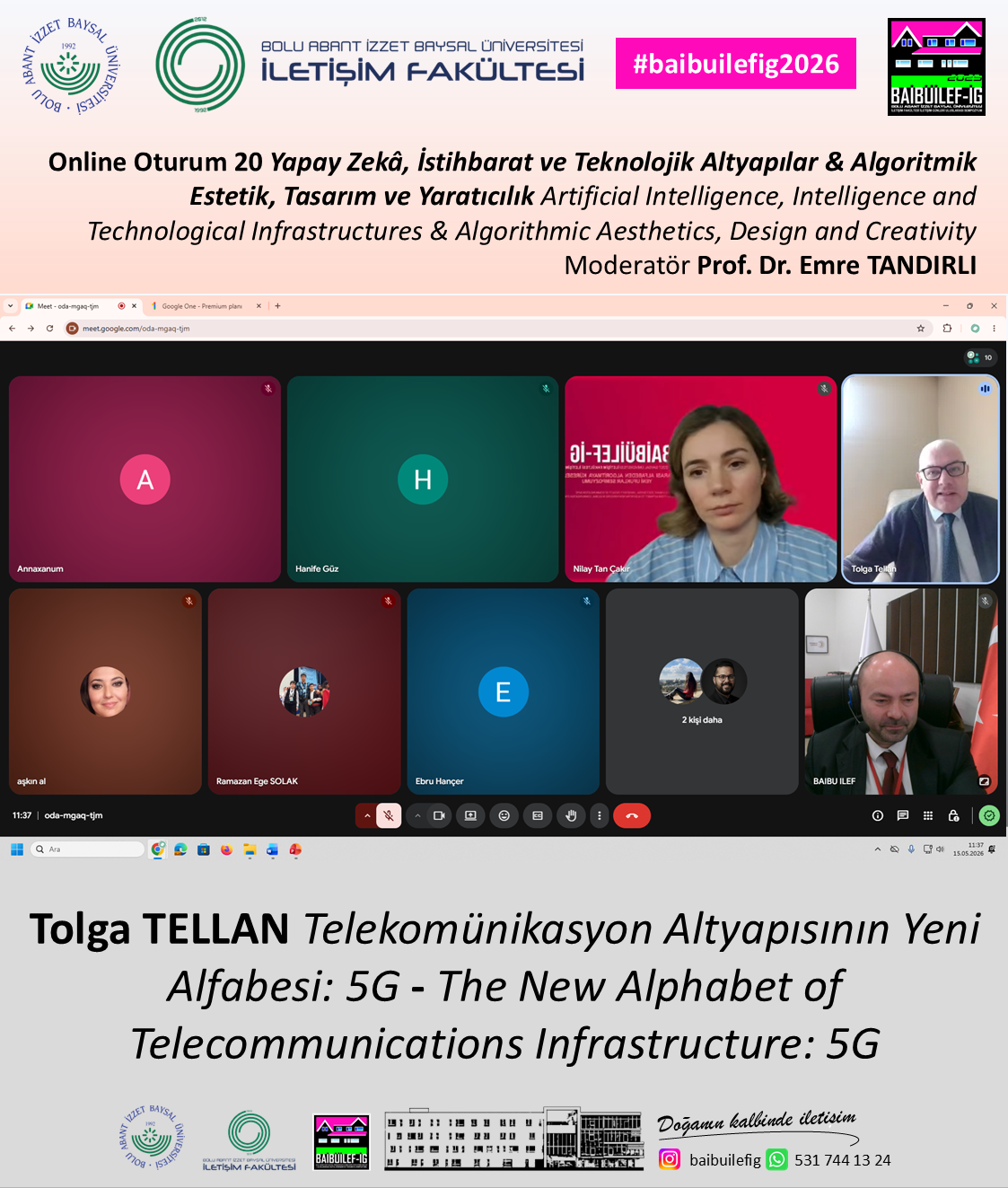
In the session addressing current developments in the telecommunications field, Tolga Tellan, in his presentation titled “5G and Telecommunications,” evaluated the impact of next-generation communication infrastructures on digital transformation processes. The opportunities offered by 5G technology, particularly in terms of data transfer speeds, connection capacity, and new media ecosystems, were shared with the participants.
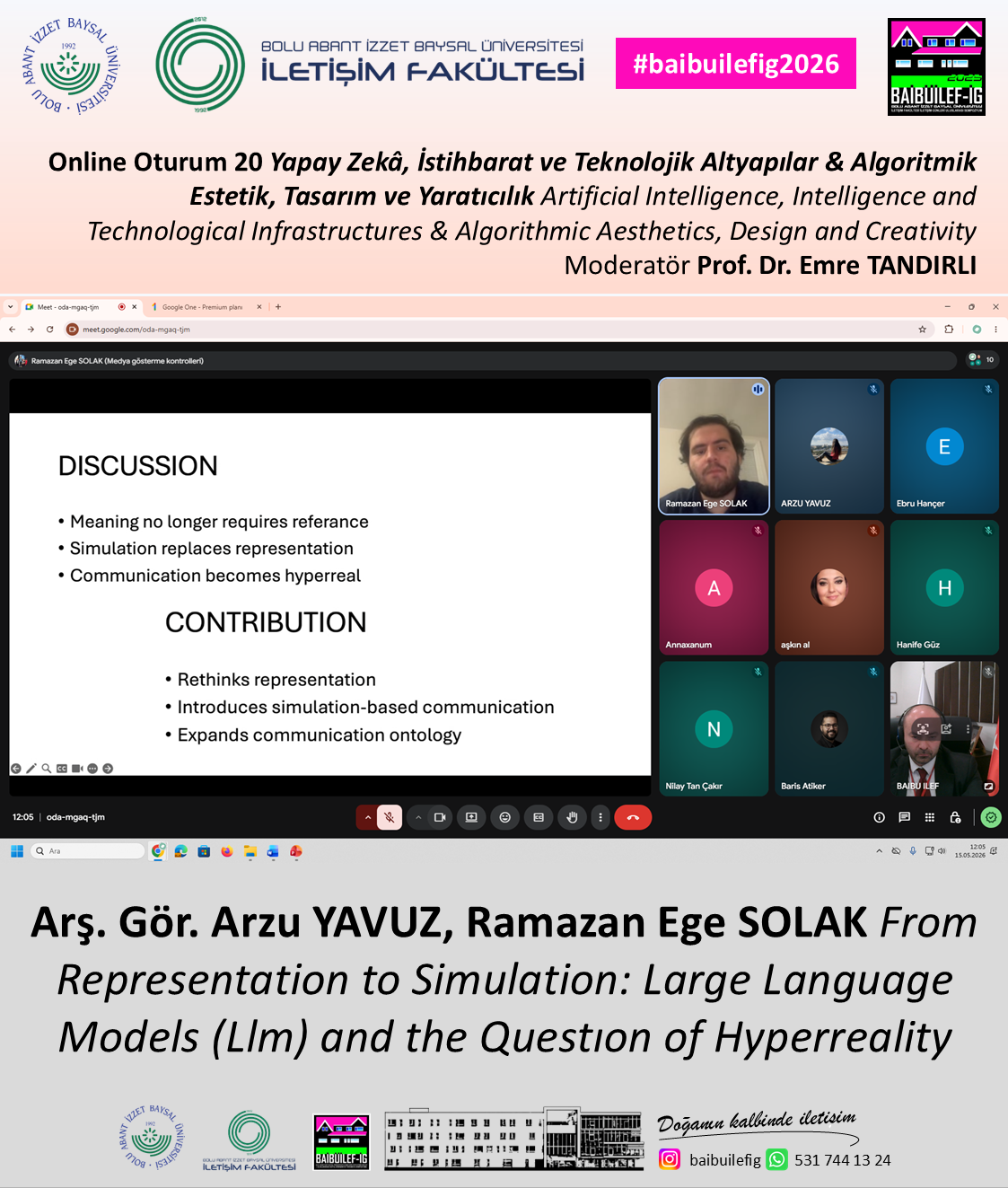
In the presentation titled “LLM and Hyperreality,” given by Research Assistants Arzu Yavuz and Ramazan Ege Solak, the relationship between large language models (LLM) and the concept of hyperreality was discussed. How AI-generated content transforms the boundaries between reality and simulation was evaluated through theoretical and applied examples.
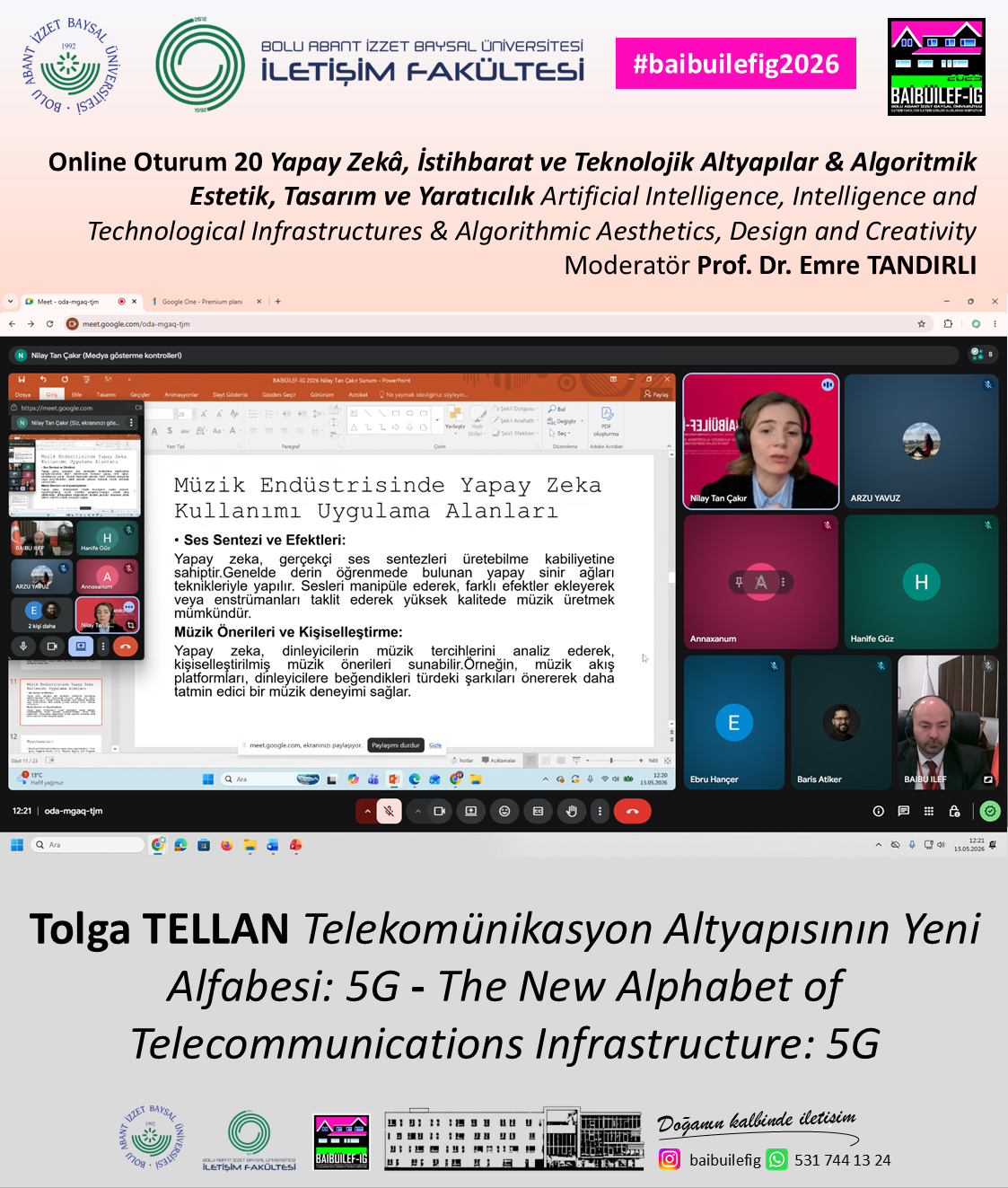
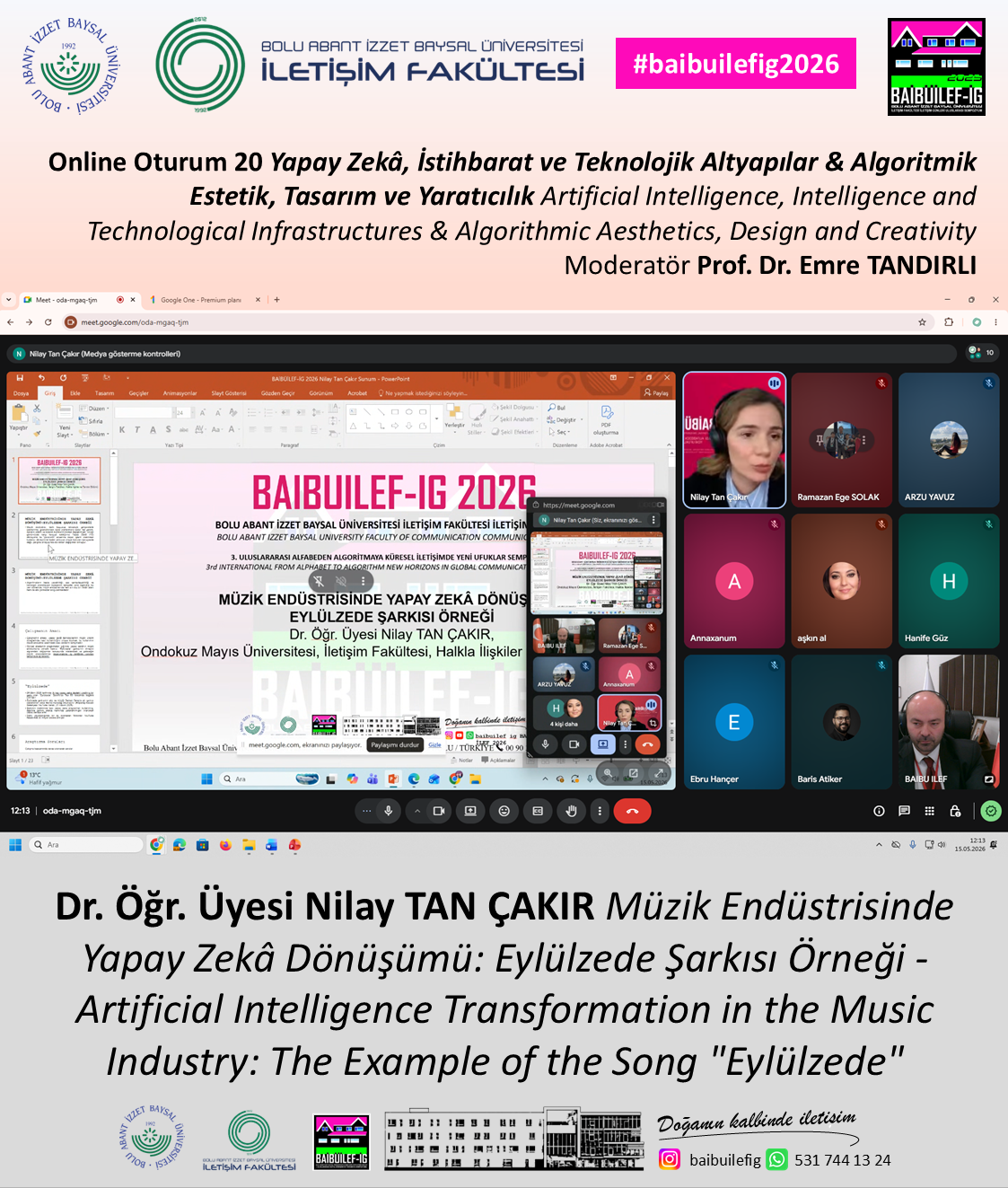
Focusing on the relationship between music and artificial intelligence, Dr. Nilay Tan Çakır, in her presentation titled “Artificial Intelligence and the Music Industry,” addressed the increasingly significant role of AI technologies in production, distribution, and consumption processes. The effects of digital tools on musical creativity and industrial transformation were shared with the participants.
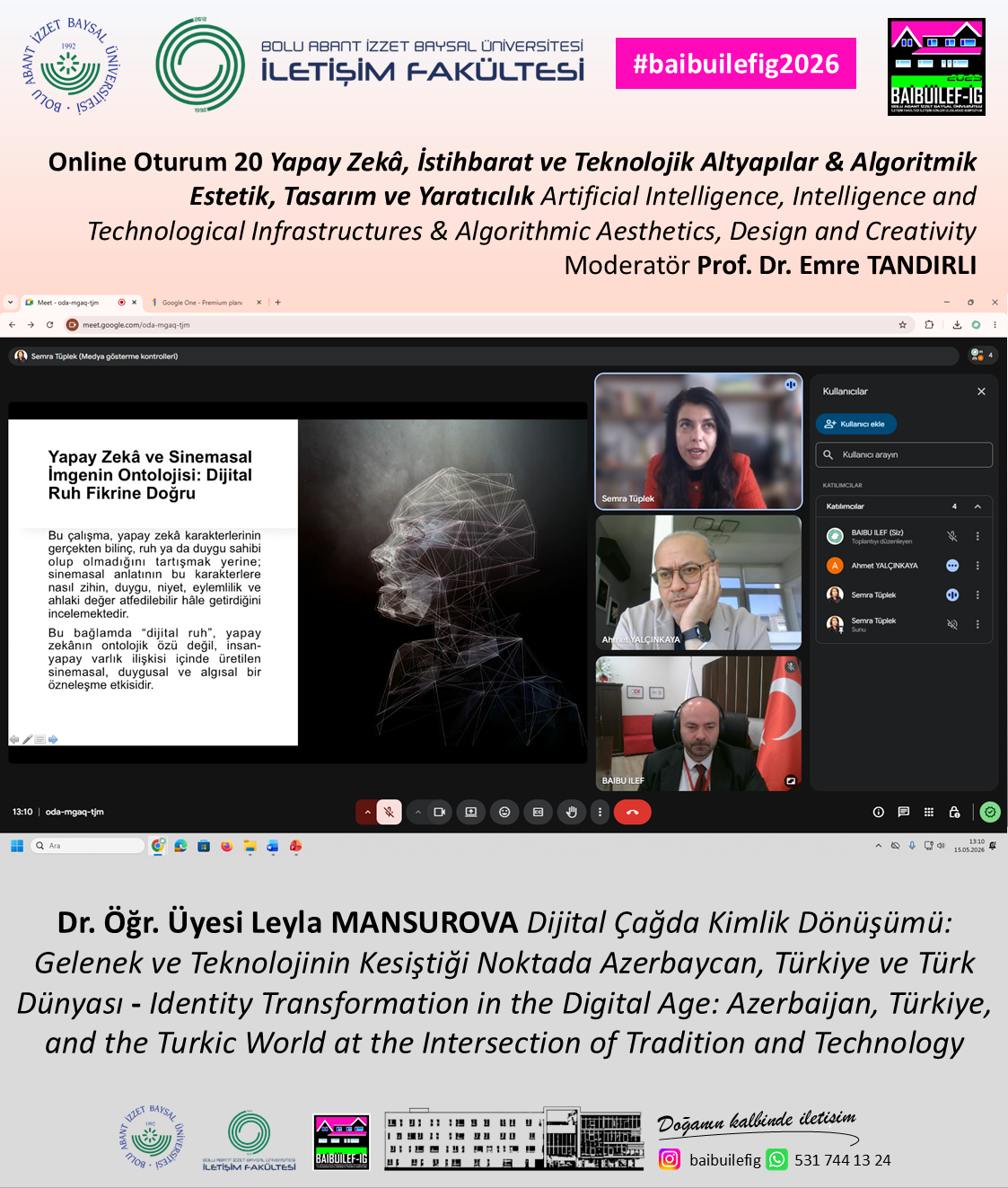
Dr. Öğr. In the study titled “Identity Transformation in the Digital Age,” presented by member Leyla Mansurova, the processes of reshaping individual and social identities through digital platforms were examined. The effects of online interactions on identity presentation and self-perception were evaluated from different perspectives.
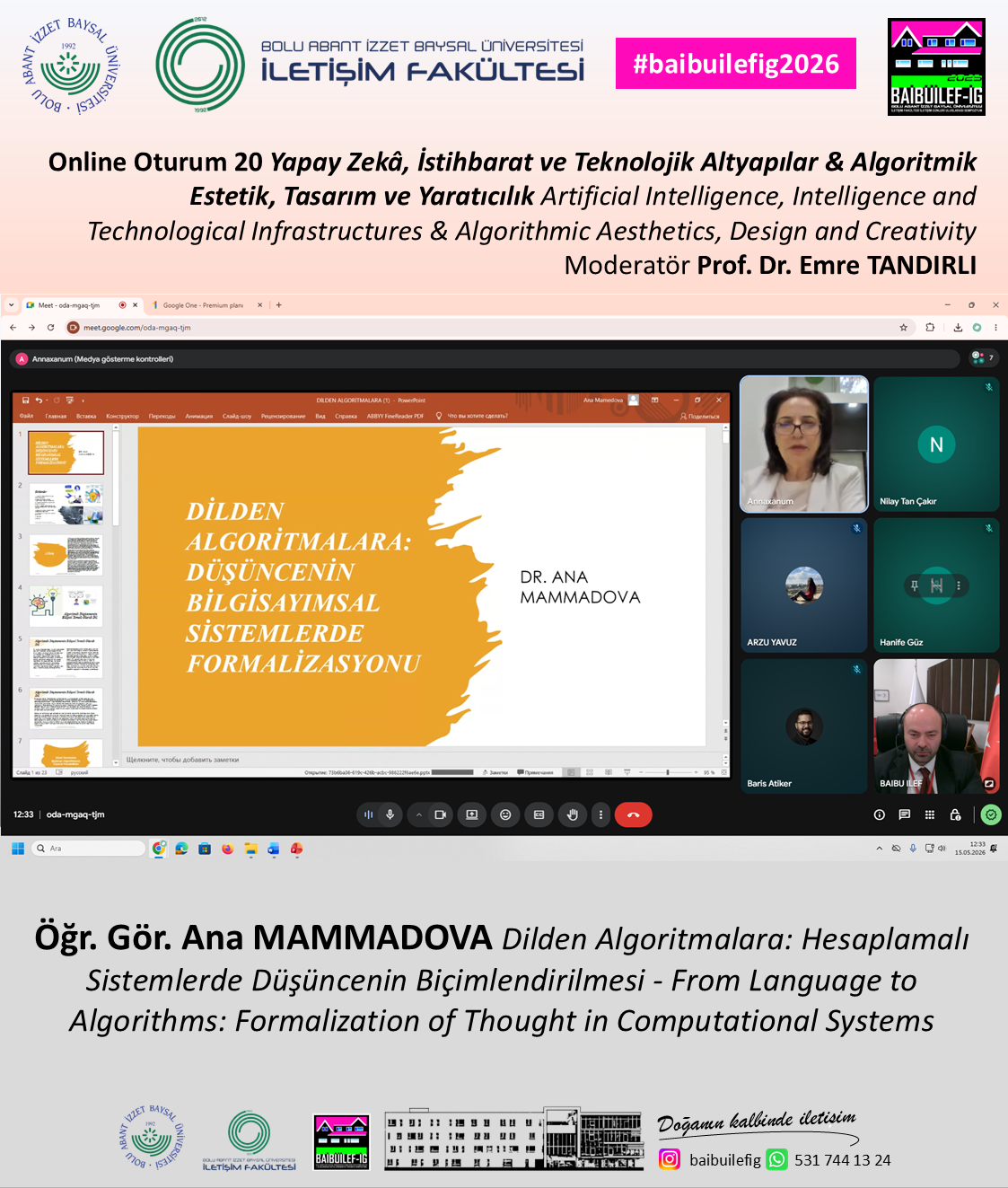
Focusing on the relationship between language and algorithms, Lecturer Ana Mammadova, in her presentation titled “From Language to Algorithms,” addressed the process of the transformation of human language into algorithmic systems and the developments of artificial intelligence technologies in the field of language processing. The presentation drew attention to the interdisciplinary interaction between linguistics and artificial intelligence.
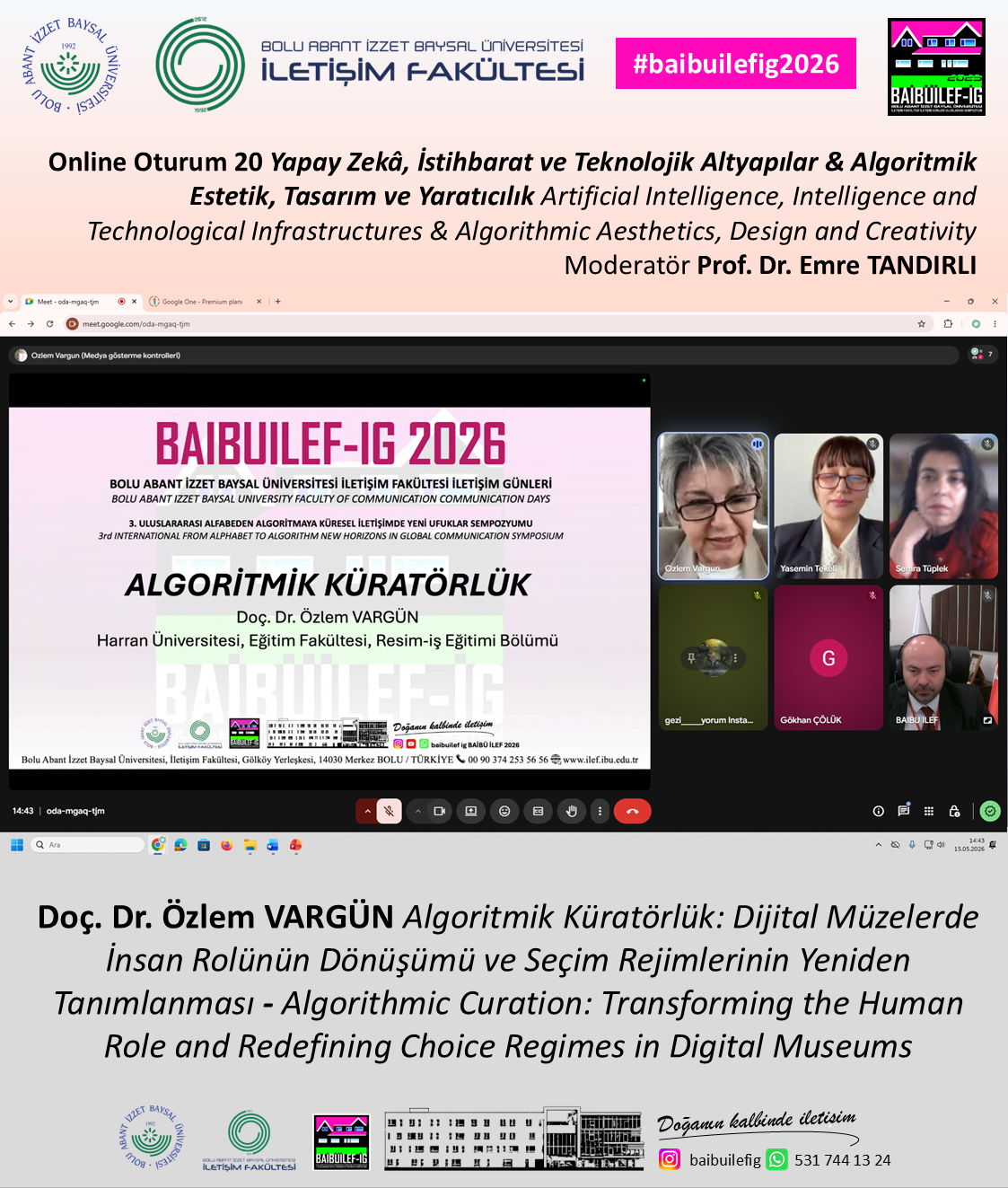
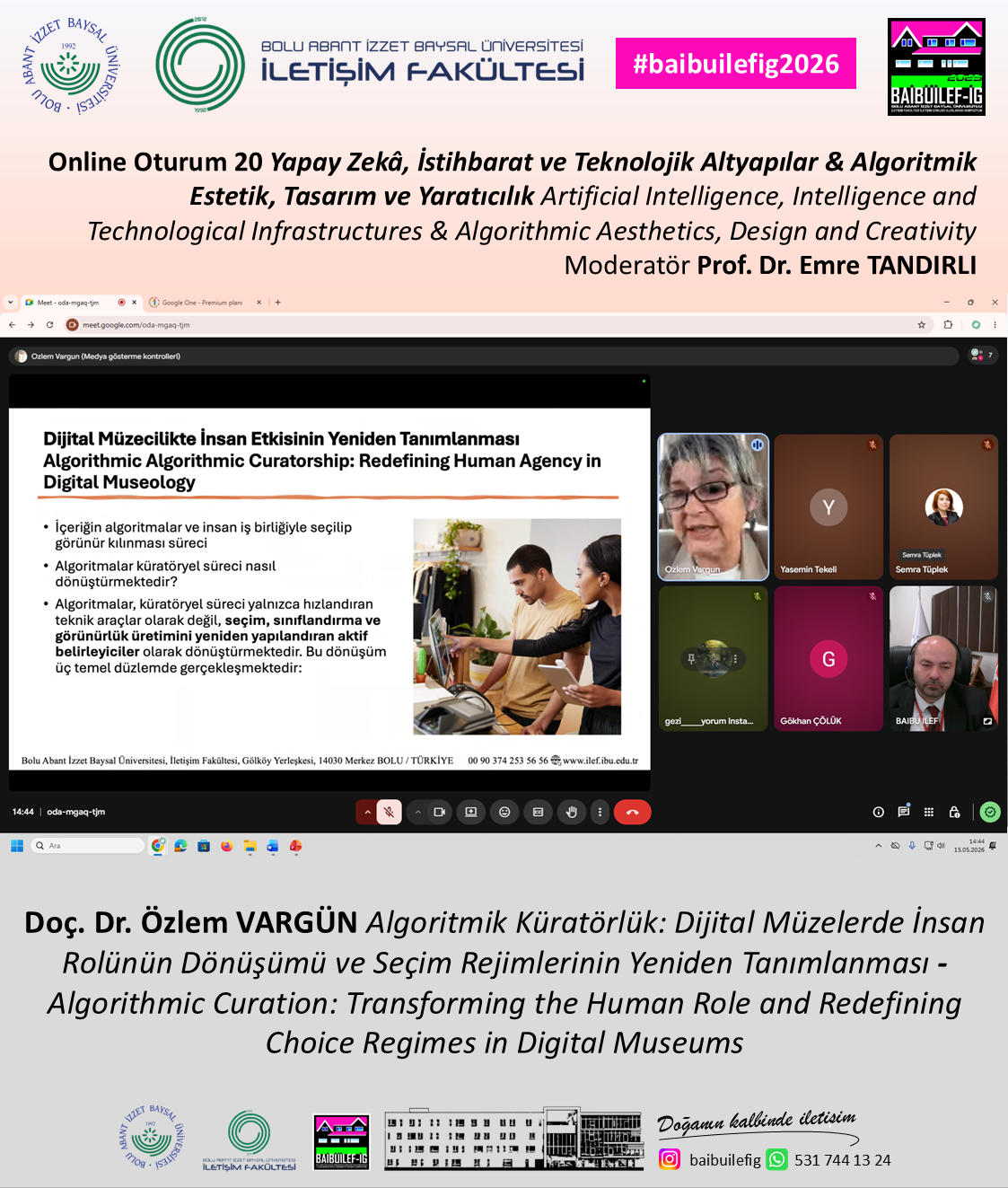
In the continuation of the session, Assoc. Prof. Dr. Özlem Vargün, in her study titled “Algorithmic Curation,” evaluated the content selection and presentation mechanisms of digital platforms. The curatorial role of algorithms in cultural production and consumption processes was discussed from a media ecology perspective.
Lecturer Dr. Serpil Samur's presentation, titled "Algorithmic Aesthetics," focused on how AI-supported production processes are transforming the understanding of art and aesthetics. Current assessments on the role of algorithms in creative processes and their impact on aesthetic production were shared.
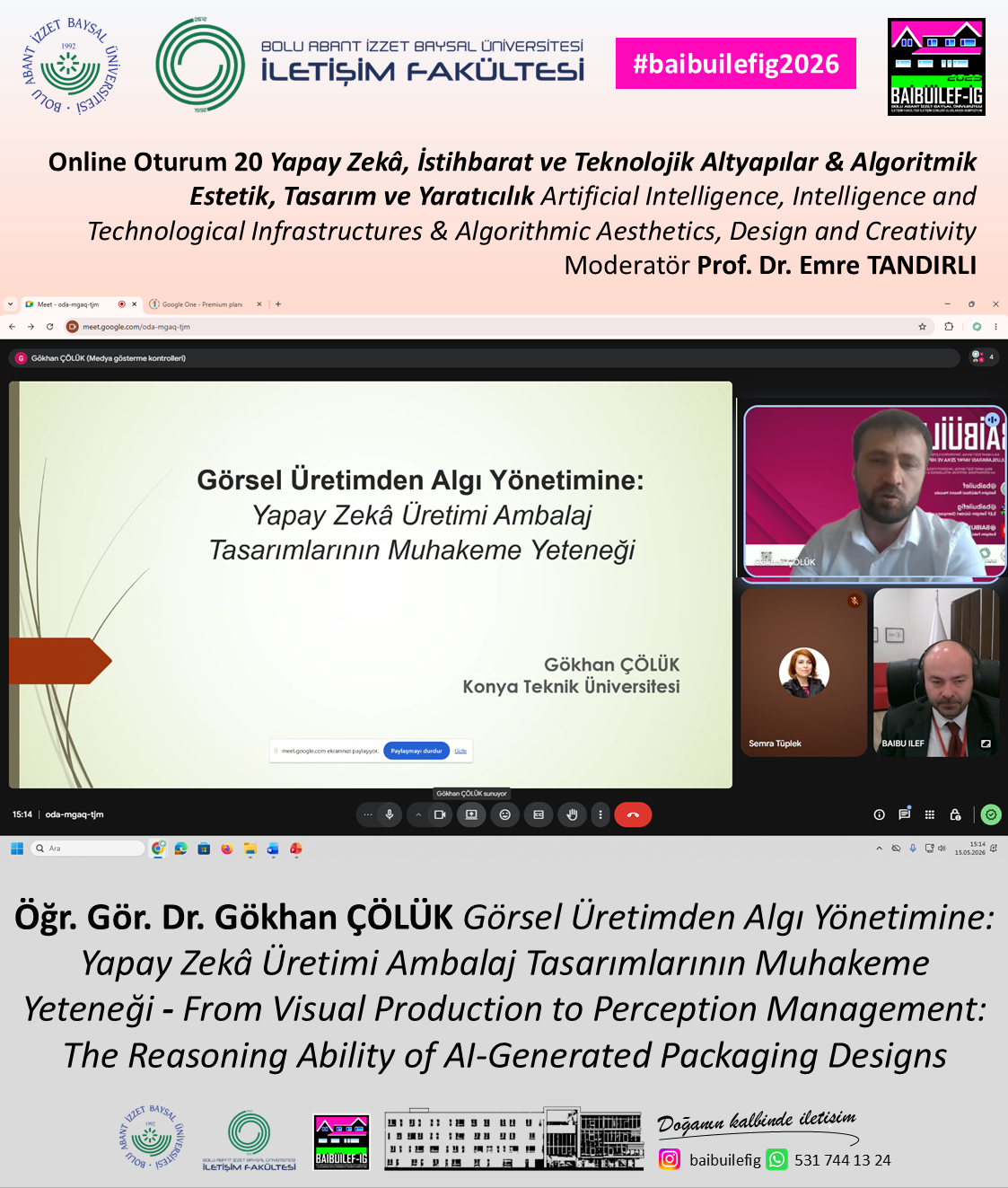
Focusing on applications in the field of design, Lecturer Dr. Gökhan Çölük, in his presentation titled "AI Packaging Designs," discussed AI-supported packaging design processes with examples. The presentation evaluated the contributions of AI to design processes in terms of efficiency, creativity, and user experience.
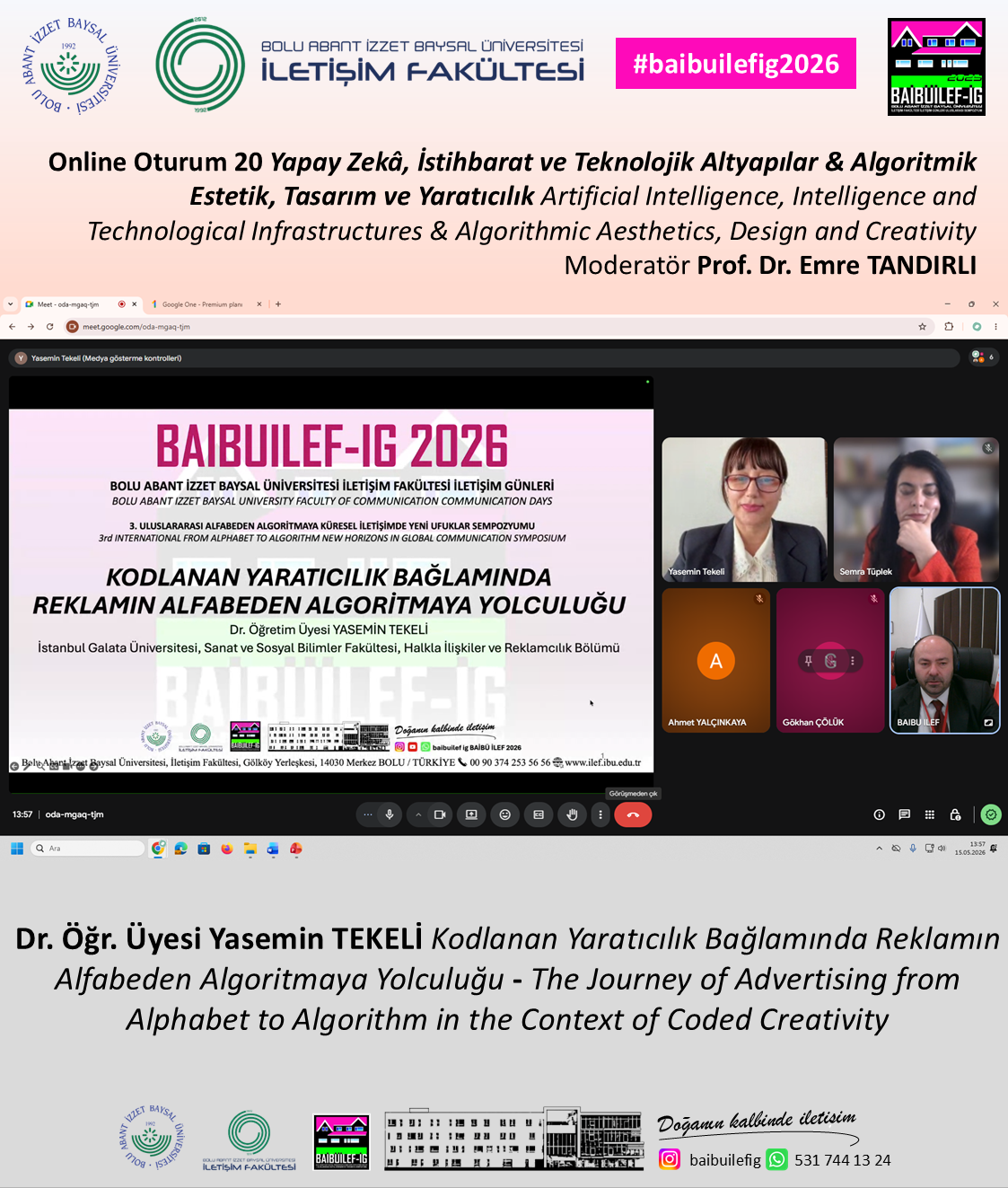
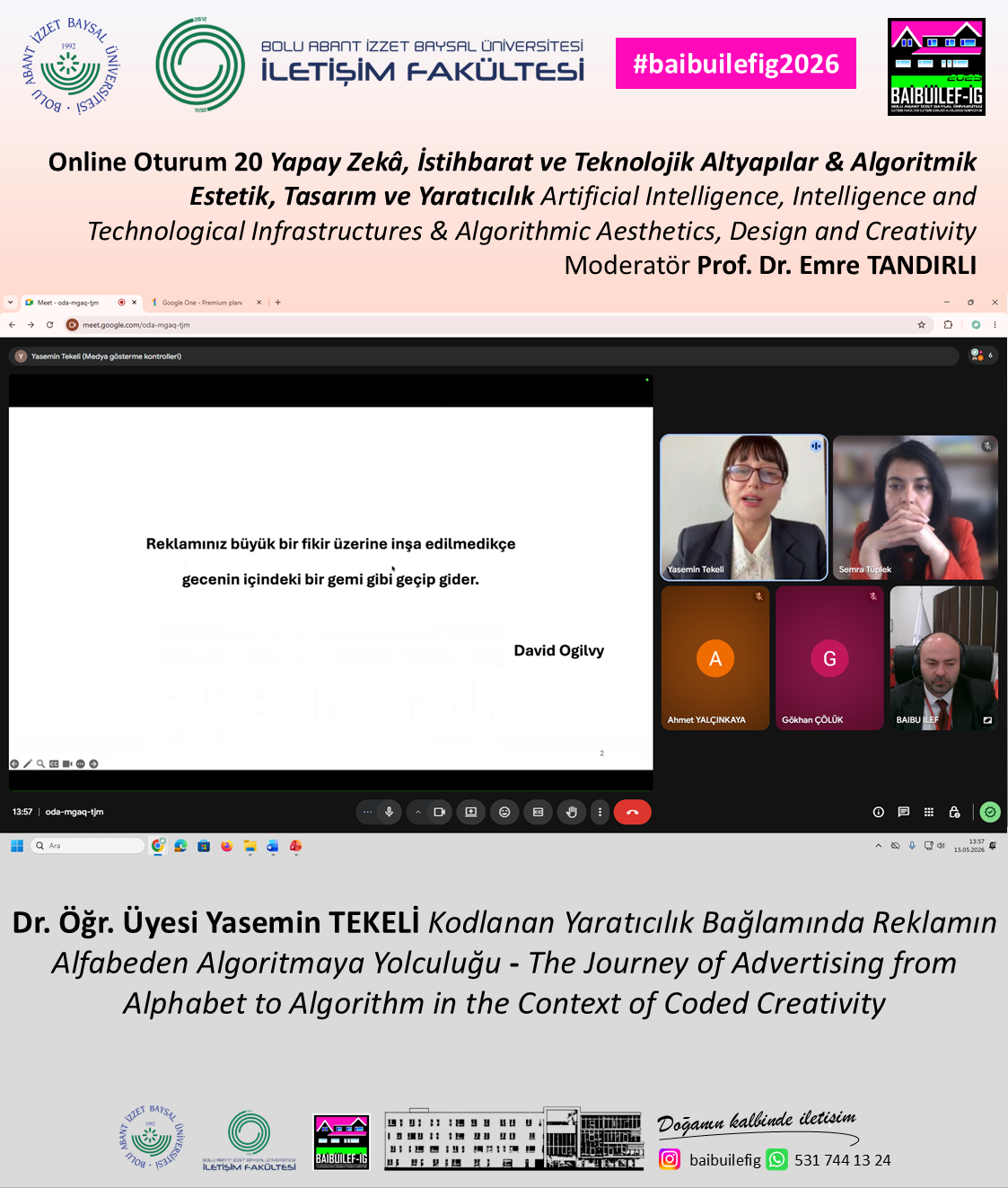
Dr. Yasemin Tekeli, examining transformations in the field of advertising, in her presentation titled "Advertising from Alphabet to Algorithm," discussed the shift from traditional advertising approaches to algorithm-based approaches.