02 Haziran 2026 Salı
The Morning Session 2, titled “Digital Culture, Memory and Identity,” held within the scope of the BAİBÜ İLEF-İG 2026 – 3rd International Communication, Artificial Intelligence and Hypermedia Symposium organized by the Faculty of Communication of Bolu Abant İzzet Baysal University, brought together expert academics and researchers in the field. Moderated by Assoc. Prof. Dr. Gülşah Sarı, Research Assistant Sadullah Bağ, and Berke Birol, the session comprehensively addressed the effects of digitalization on individual and collective memory, online commemoration practices, the role of algorithmic systems in social processes, and representation problems in the digital public sphere.
In the session, which discussed the new social dynamics shaped by today's digital culture, current research findings were shared with the participants across a wide spectrum ranging from collective memory to digital identities, from social media representations to algorithmic inequalities.
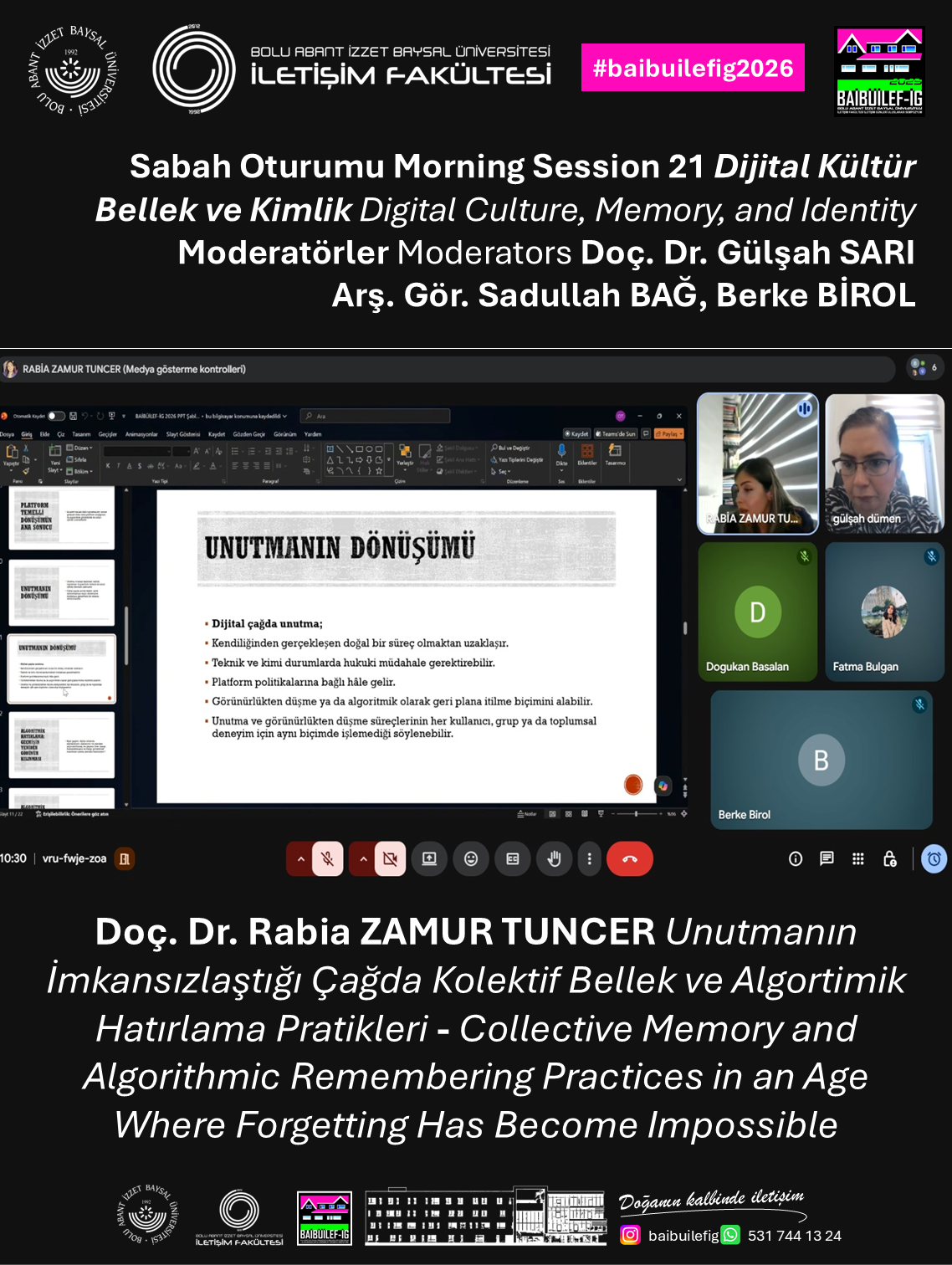
Assoc. Prof. Dr. Gülşah Sarı gave the first presentation of the session. Rabia Zamur Tuncer, in her study titled “Collective Memory and Algorithmic Remembering Practices in an Age Where Forgetting Has Become Impossible,” evaluated the effects of digital technologies on the formation and maintenance of social memory. Focusing on how the processes of forgetting and remembering have transformed with social media platforms and digital archives making information about the past constantly visible, Tuncer addressed the effects of algorithms on individual and collective memory from various perspectives.
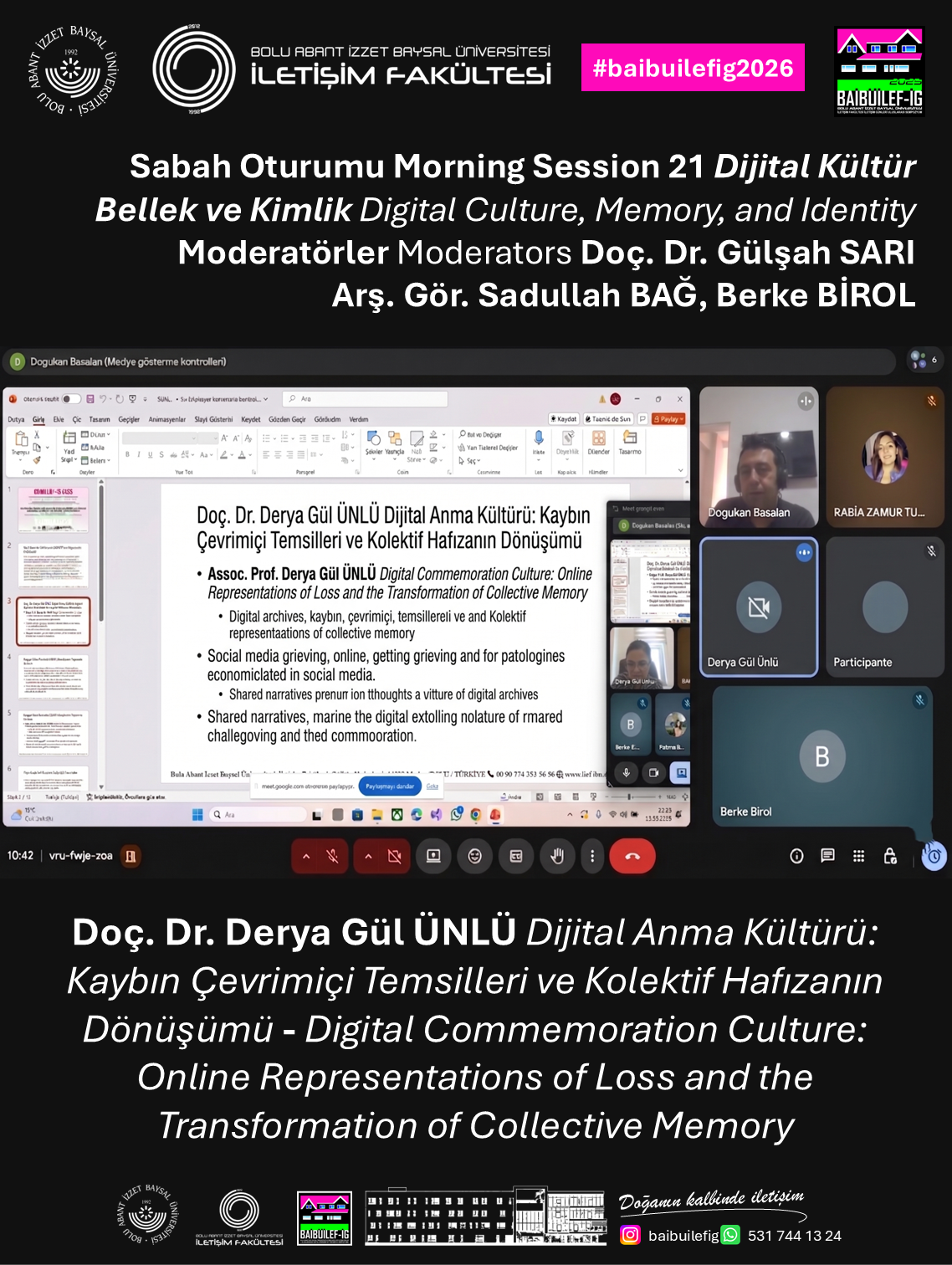
Following her, Assoc. Prof. Dr. Derya Gül Ünlü, in her presentation titled “Digital Remembrance Culture: Online Representations of Loss and the Transformation of Collective Memory,” evaluated the effects of digital platforms on mourning and remembrance practices. Focusing on the role of online environments in sharing experiences of loss and the reconstruction of social memory, Ünlü revealed the relationship between digital remembrance culture and new forms of communication and social solidarity practices.
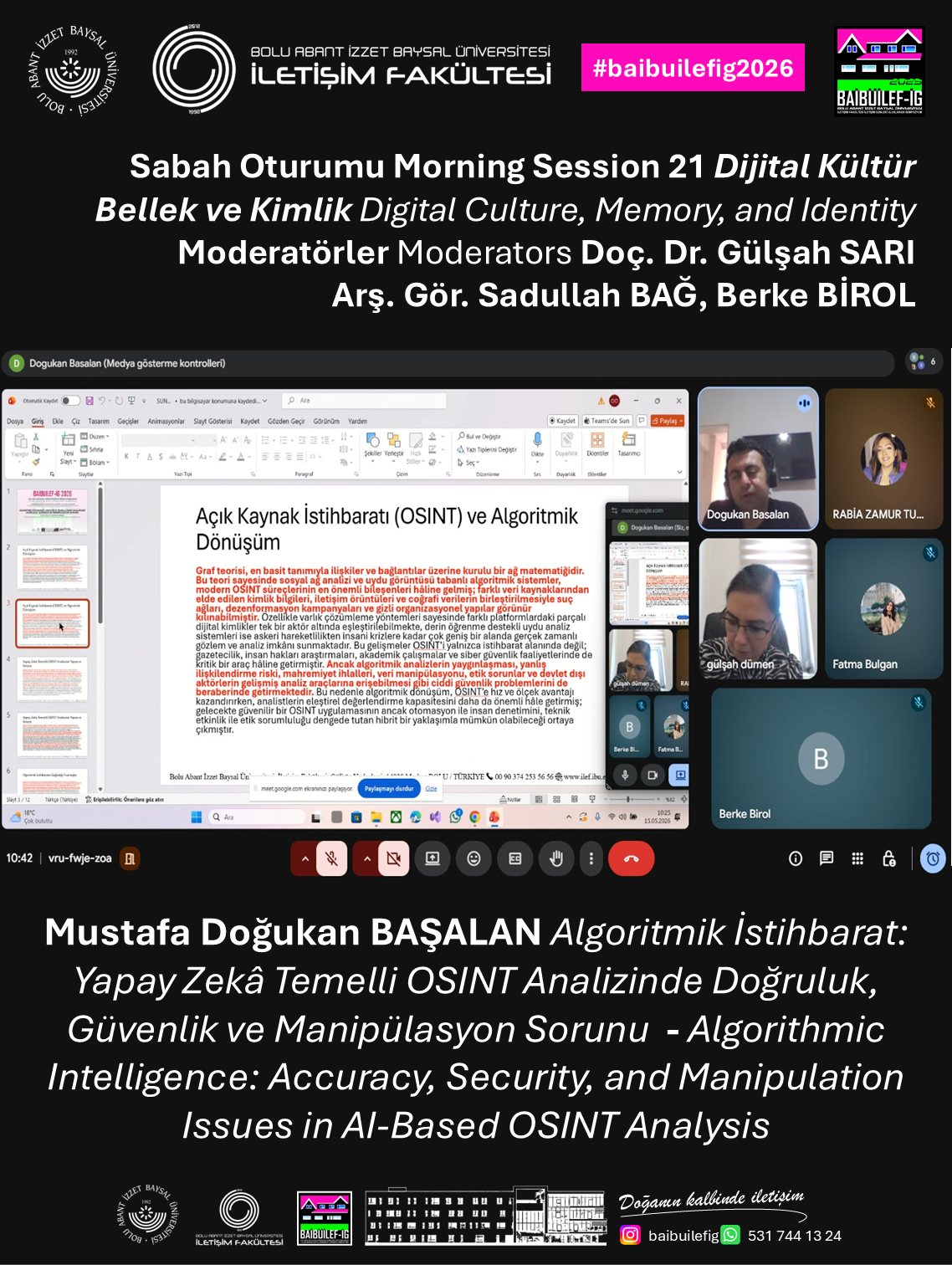
In the presentation titled “Algorithmic Intelligence: Accuracy, Security, and Manipulation Issues in AI-Based OSINT Analysis” by Mustafa Başalan, the use of artificial intelligence technologies in open-source intelligence (OSINT) studies was discussed. The presentation highlighted both the advantages of algorithms in data analysis and significant problems such as misinformation, manipulation, and security risks. The importance of maintaining accuracy and ethical principles in AI-supported analysis processes was emphasized.
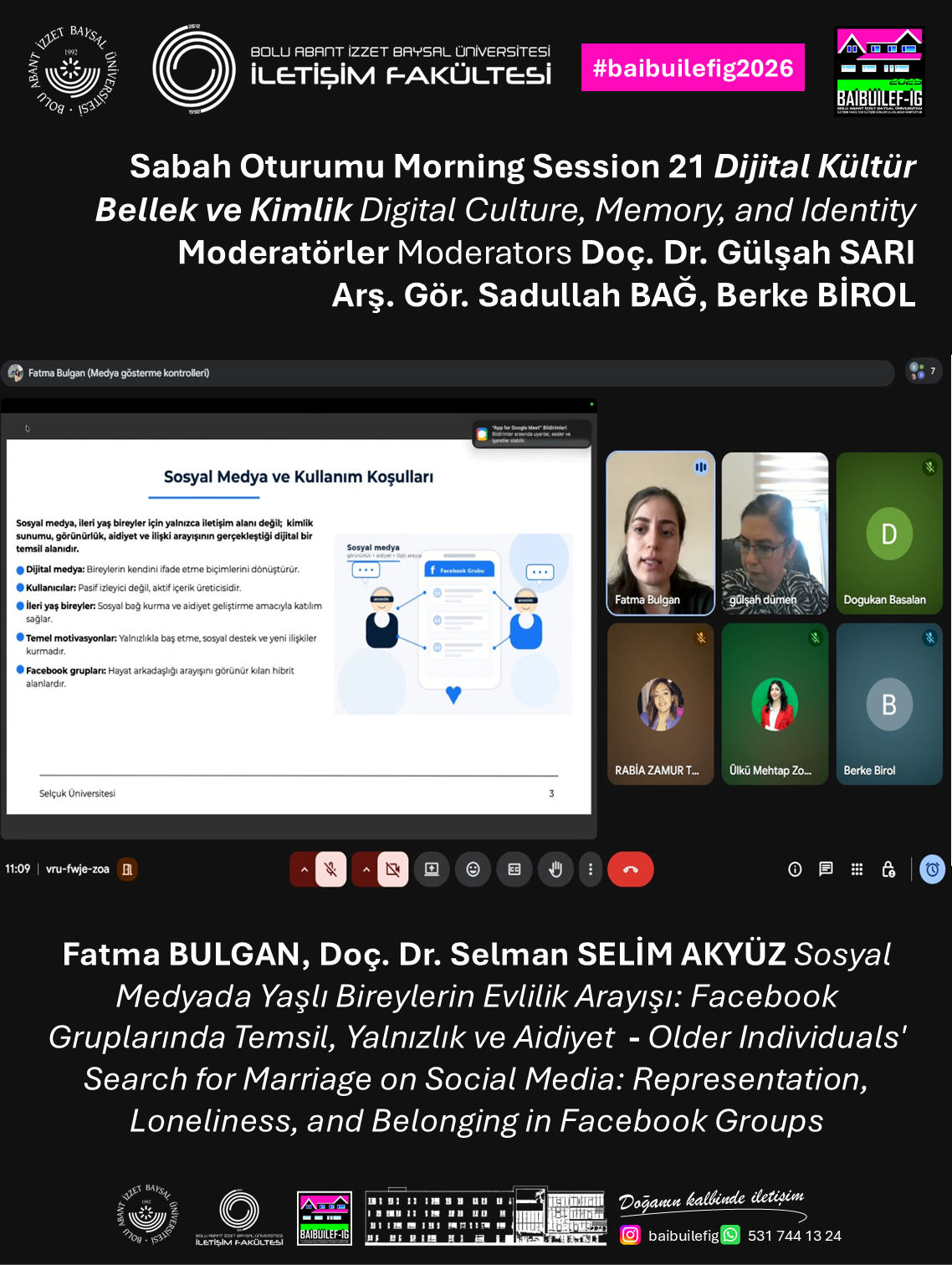
In another presentation at the session, Fatma Bulgan and Assoc. Prof. Dr. Selman Selim Akyüz shared their research titled “The Search for Marriage Among Older Individuals on Social Media: Representation, Loneliness, and Belonging in Facebook Groups.” The study examined the relationships older individuals form on social media platforms, the formation of a sense of belonging in online communities, and the effects of digital communication on the experience of loneliness. The presentation was followed with interest because it drew attention to the experiences of older users, which are often overlooked in digital culture studies.
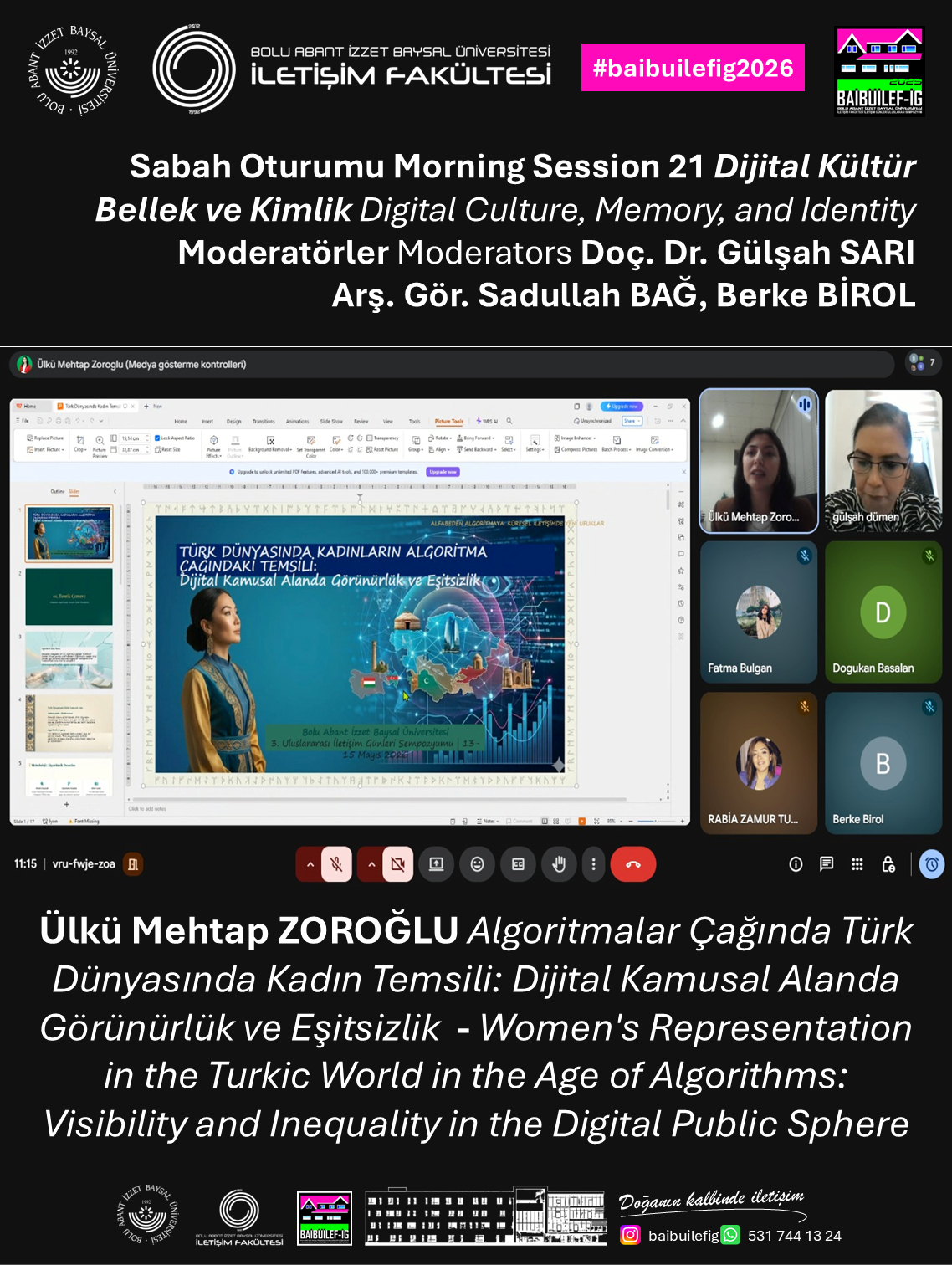
The final presentation of the session was given by Ülkü Mehtap Zoroğlu, whose study, titled “Women’s Representation in the Turkic World in the Age of Algorithms: Visibility and Inequality in the Digital Public Sphere,” focused on the representation of women on digital platforms. The presentation addressed the effects of algorithms on visibility mechanisms, gender-based inequalities in the digital public sphere, and the forms of online representation of women in the Turkic world. The ongoing structural problems, alongside the opportunities offered by digital environments, were also comprehensively evaluated.
The presentations throughout the session revealed that digital technologies are transforming not only communication processes but also social memory, identity formation, public participation, and social relations. Following the presentations, participants engaged in a question-and-answer session with the researchers, discussing current trends in digital culture studies.
The “Digital Culture, Memory, and Identity” session, held within the scope of BAİBÜ İLEF-İG 2026, addressed the effects of the digital age on individuals and societies from an interdisciplinary perspective, while also making significant contributions to current academic discussions on artificial intelligence and digitalization. The session added to the scholarly richness of the symposium by providing an opportunity to share new research perspectives on memory, identity, and representation studies.