02 Haziran 2026 Salı
The Morning Session 22, titled “Disinformation, Crisis and Digital Security,” held as part of the BAİBÜ İLEF-İG 2026 – 3rd International Communication, Artificial Intelligence and Hypermedia Symposium organized by the Faculty of Communication at Bolu Abant İzzet Baysal University, addressed information security and disinformation, two of the most important problem areas of the digital age, from an academic perspective. Moderated by Prof. Dr. Selami Özsoy, Dr. Ayşe Aldemir, and Rabia Genç, the session included comprehensive discussions on crisis communication, misinformation spread on social media platforms, conspiracy theories, digital censorship practices, and AI-supported narrative forms.
In today's world, where the decisive role of digital communication environments in information production and circulation is increasingly significant, access to accurate information, combating disinformation, and digital security formed the main axes of discussion. Academics and researchers shared new risks and proposed solutions emerging in the digital media ecosystem with the participants, in light of current examples and theoretical approaches.
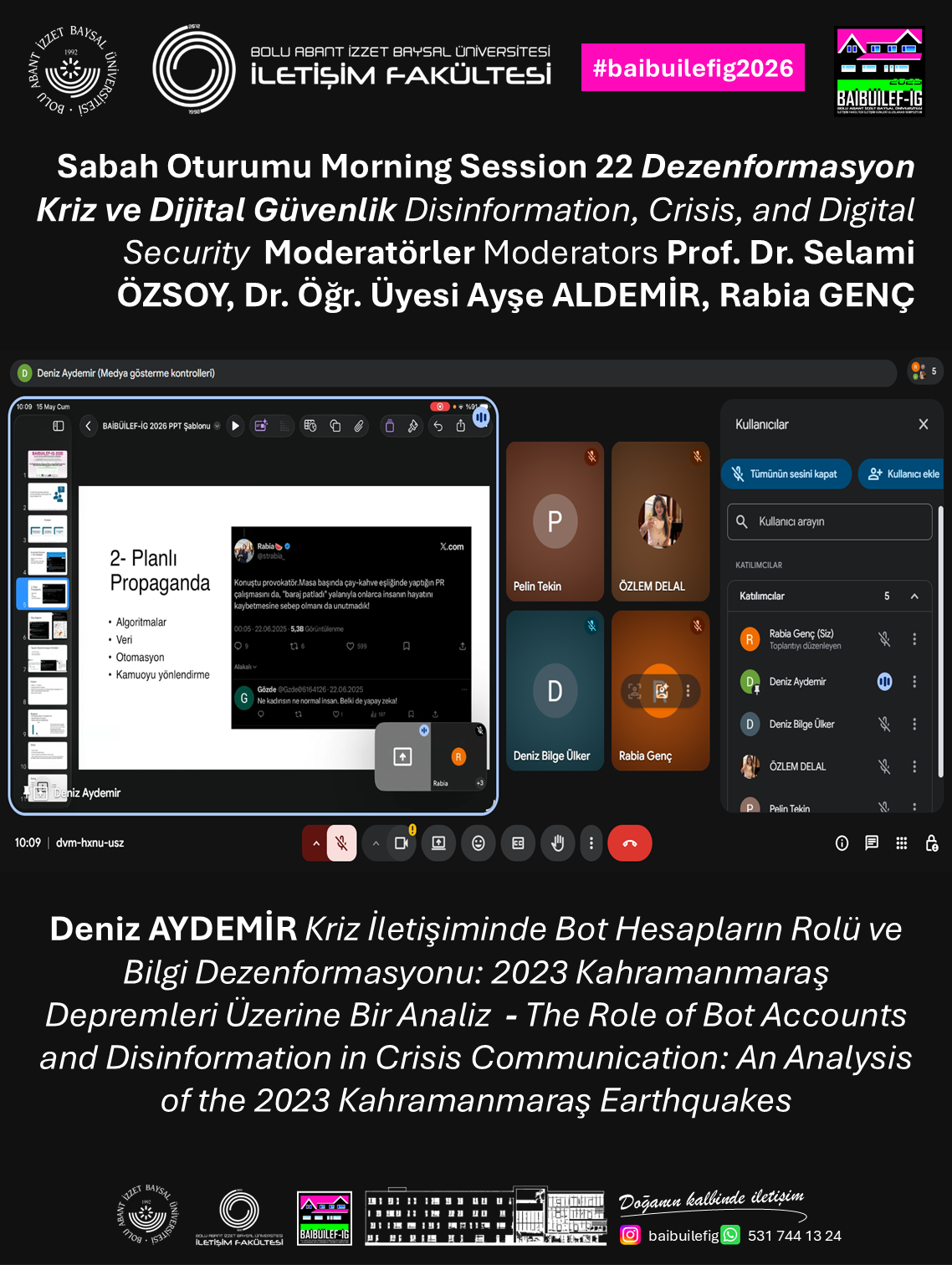
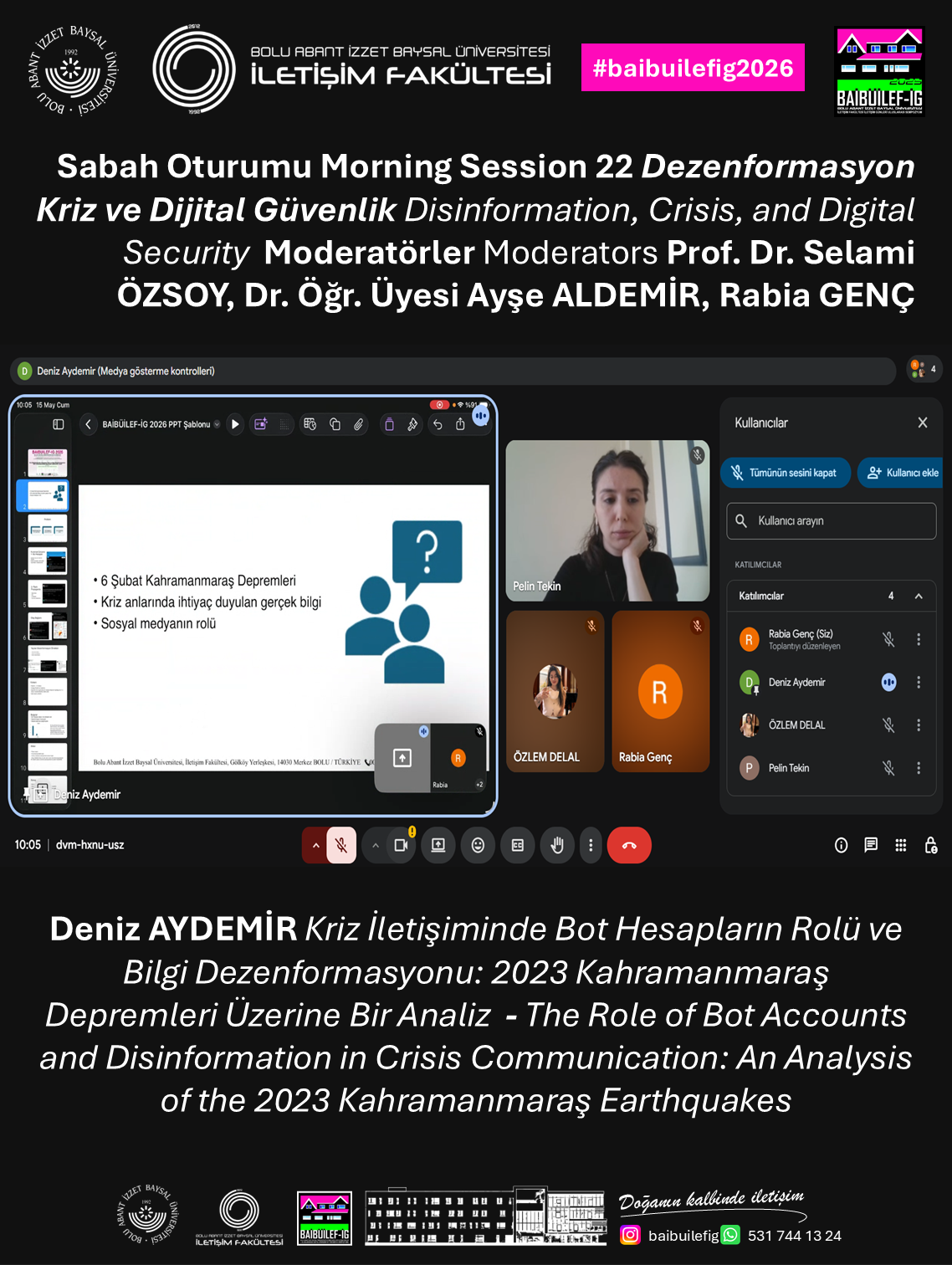
In the first presentation of the session, Deniz Aydemir presented her study titled “The Role of Bot Accounts and Information Disinformation in Crisis Communication: An Analysis of the 2023 Kahramanmaraş Earthquakes.” The research examined the effects of bot accounts operating on social media platforms during disaster periods on the flow of information. Specifically, the consequences of false or unverified information spread during crises on public perception and crisis management processes were evaluated, while highlighting the importance of reliable information sources on digital platforms.
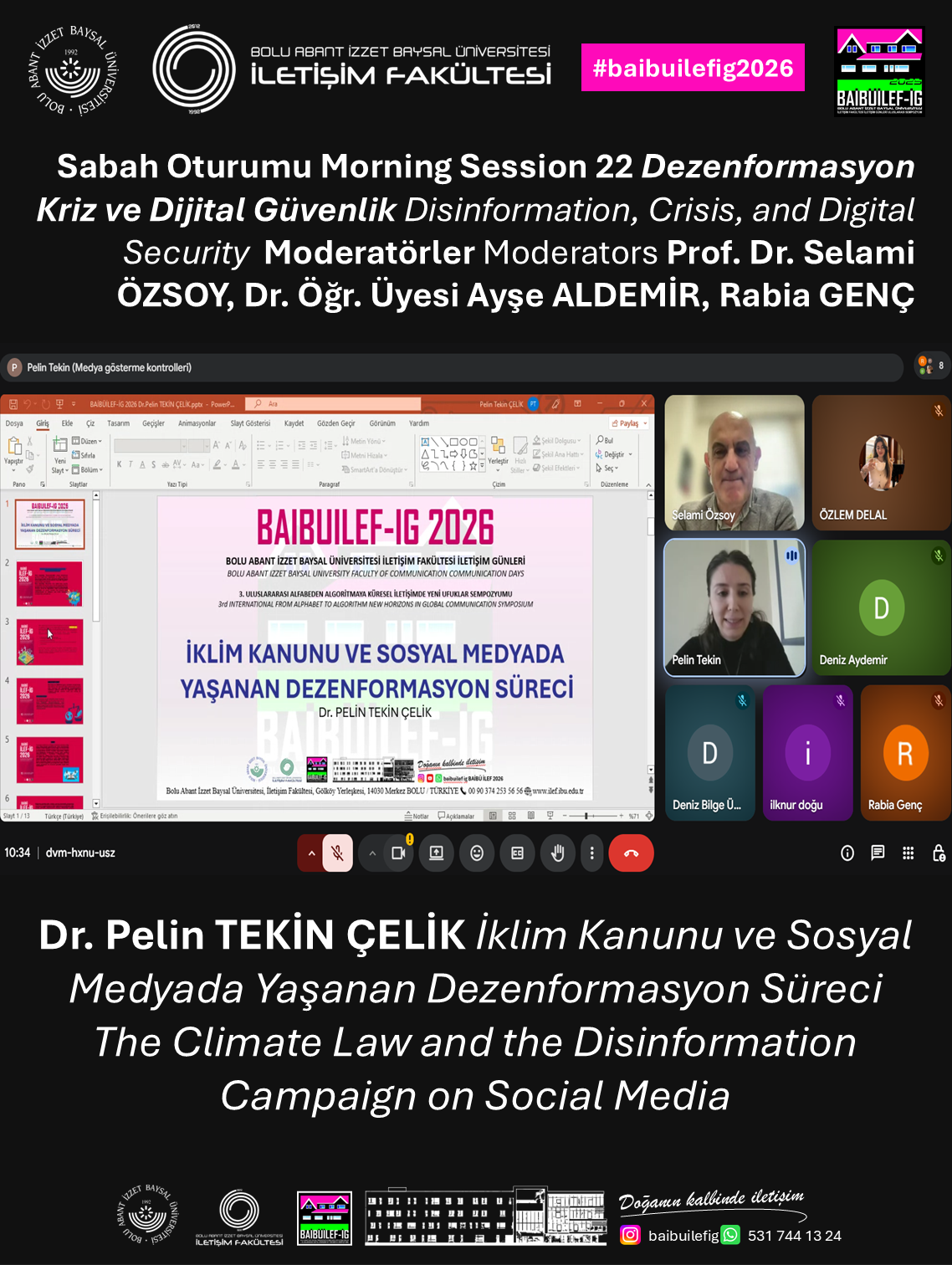
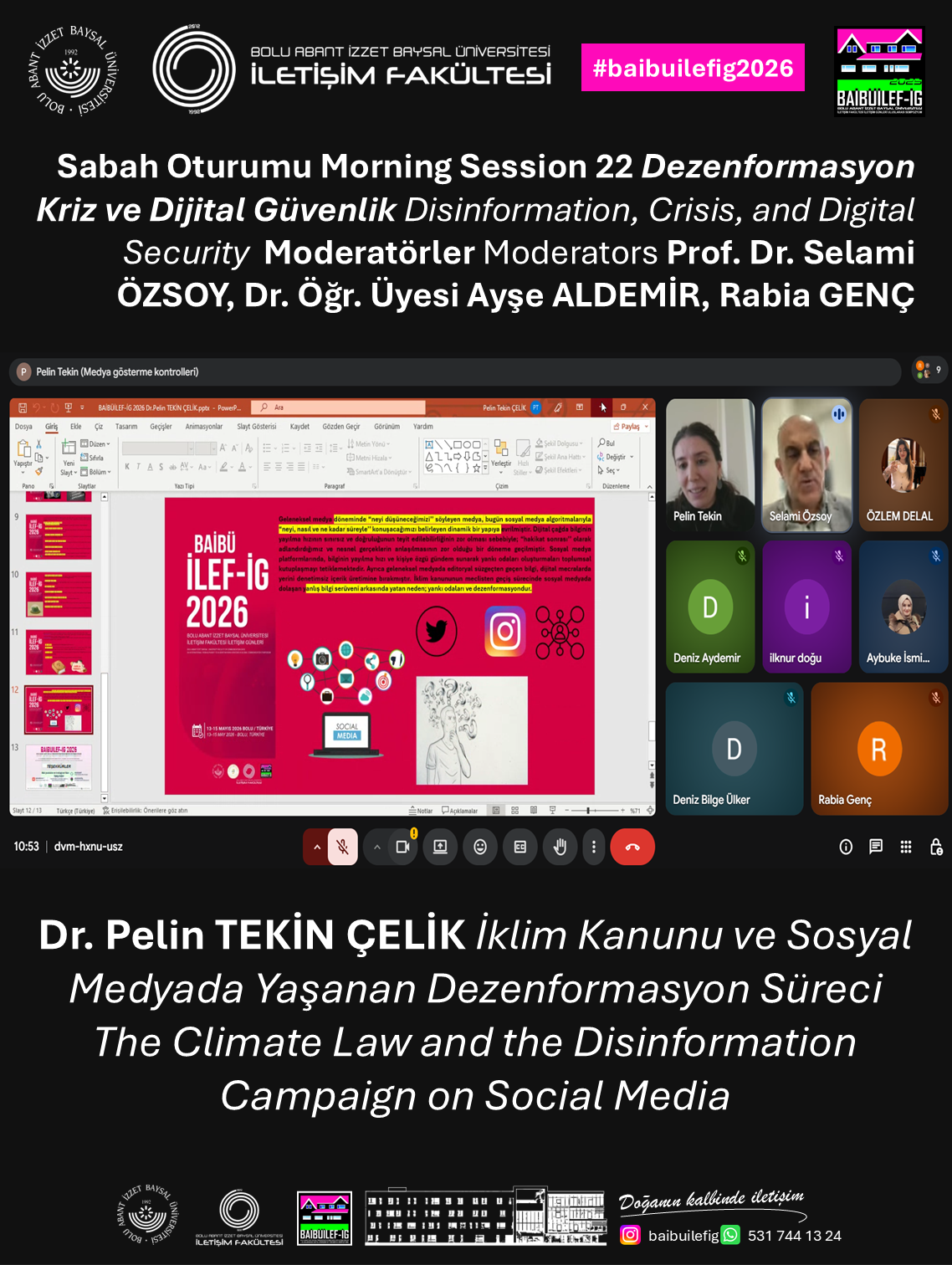
In the presentation titled “The Climate Law and the Disinformation Process on Social Media,” given by Dr. Pelin Tekin Çelik, the misinformation produced and circulated on social media within the framework of the widely publicized climate law debates was analyzed. The presentation emphasized the effects of disinformation campaigns on public opinion formation processes and the importance of information verification mechanisms on online platforms.
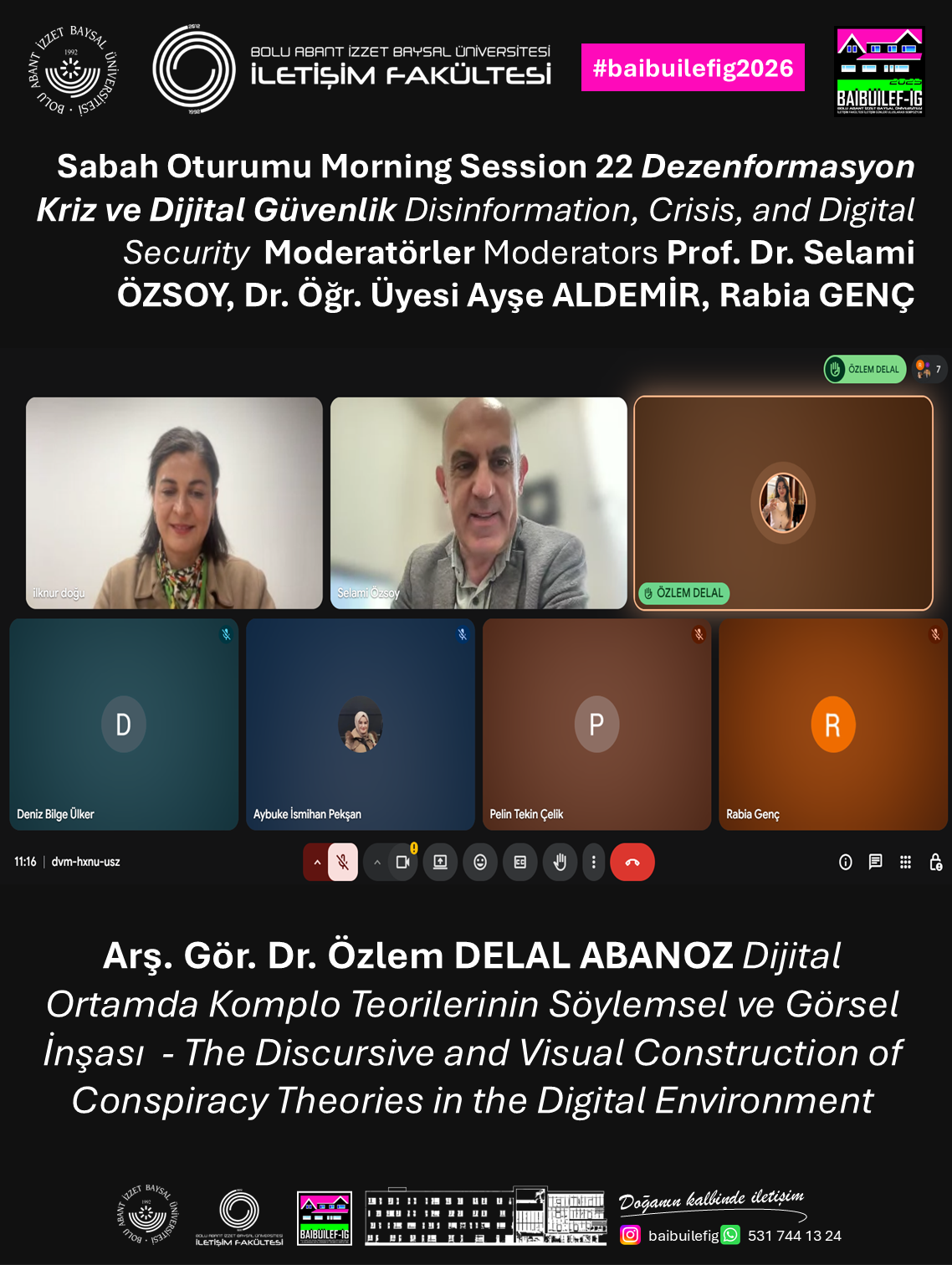
Research Assistant Dr. Özlem Delal Abanoz, in her presentation titled “The Discursive and Visual Construction of Conspiracy Theories in the Digital Environment,” evaluated how conspiracy theories are produced and disseminated in digital media environments. The study examined the effects of conspiracy narratives, constructed through visual content, symbols, and discursive strategies, on users, while addressing the role of digital culture in these processes from various perspectives.
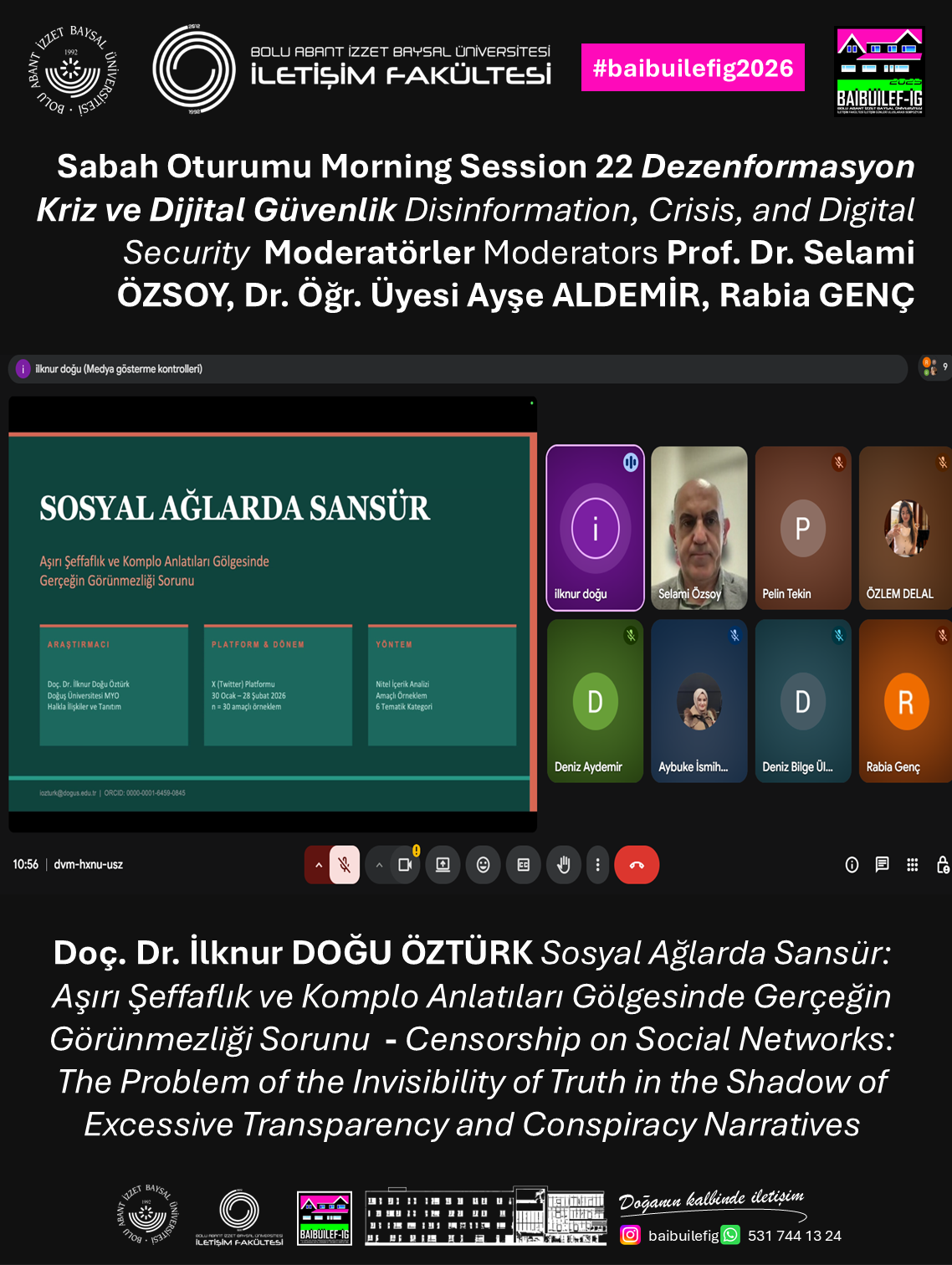
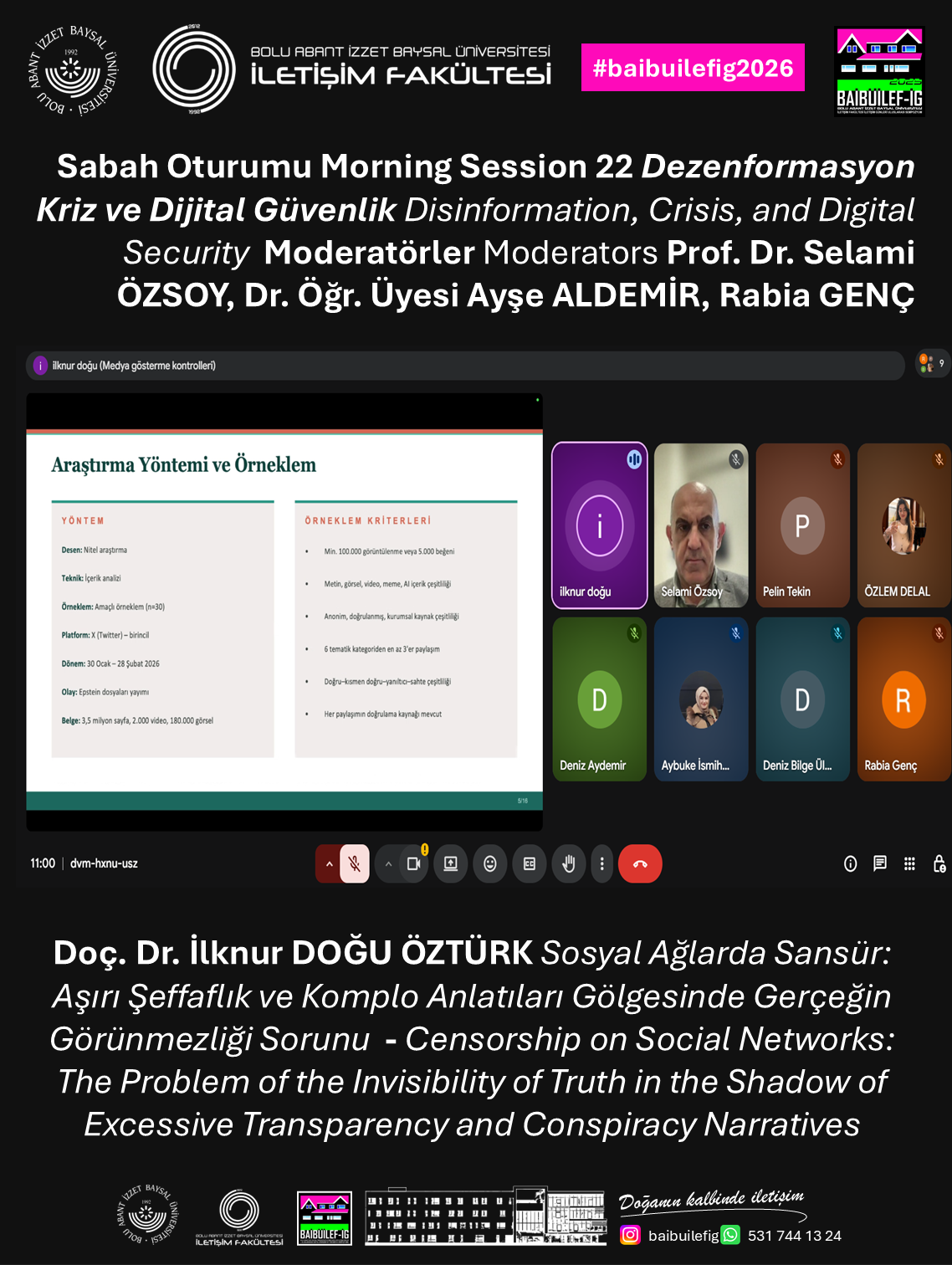
Assoc. Prof. Dr. İlknur Doğu Öztürk's presentation, “Censorship on Social Networks: The Problem of the Invisibility of Truth in the Shadow of Excessive Transparency and Conspiracy Narratives,” focused on censorship and visibility mechanisms on digital platforms. The presentation evaluated the content moderation policies of social networks, algorithmic filtering processes, and access to information problems, while discussing the effects of excessive information flow and conspiracy narratives on the visibility of truth.
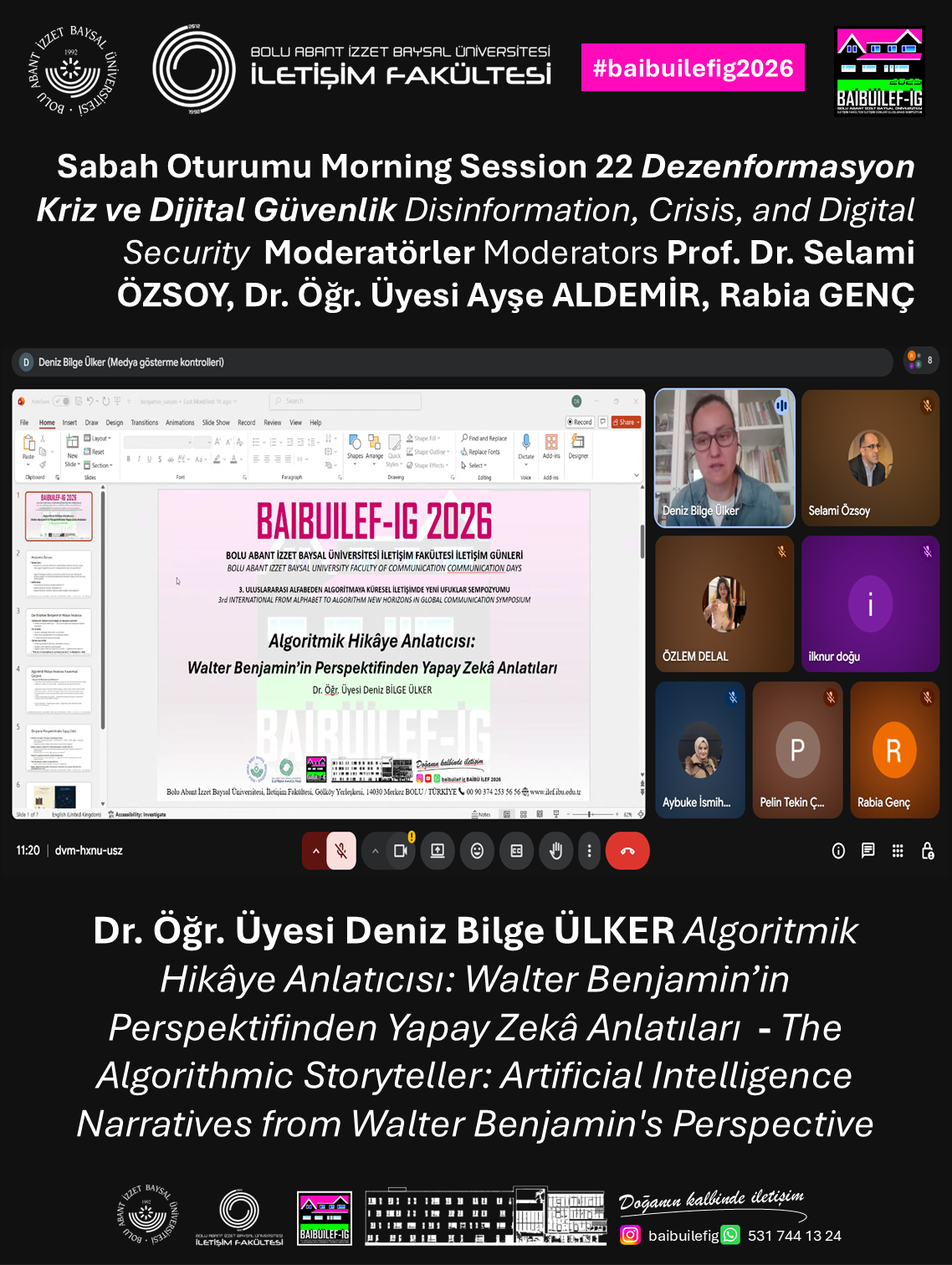
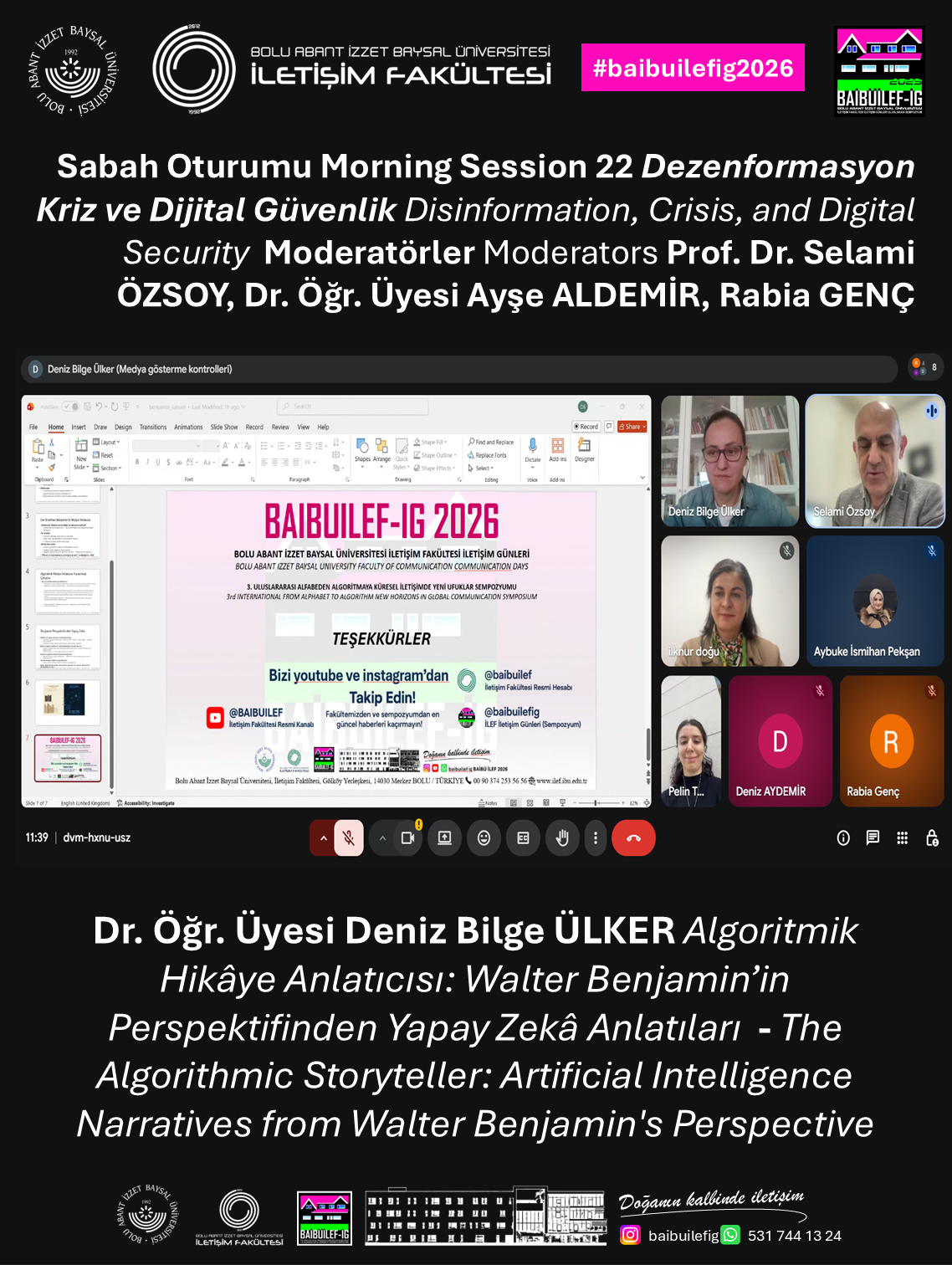
In the final presentation of the session, Dr. Deniz Bilge Ülker shared her work, “The Algorithmic Storyteller: Artificial Intelligence Narratives from Walter Benjamin's Perspective,” with the participants. The presentation aimed to evaluate narratives generated by artificial intelligence within the context of classical storytelling theories. Using Walter Benjamin's concepts of narrative and experience to examine AI-assisted content production processes, the study offered noteworthy assessments regarding the transformation of narrative in the digital age.
The presentations throughout the session revealed that disinformation is not merely a technical problem; it is also directly related to many areas such as social trust, media literacy, ethical responsibility, and democratic participation. In the question-and-answer session following the presentations, participants exchanged views on information verification processes during times of crisis, digital security policies, and the impact of AI technologies on the media ecosystem.
The "Disinformation, Crisis, and Digital Security" session, held within the scope of BAİBÜ İLEF-İG 2026, significantly contributed to the scientific discussion environment of the symposium by addressing the processes of misinformation and manipulation—one of the most important communication problems of the digital age—from different perspectives. The session facilitated the sharing of interdisciplinary perspectives across a wide range of fields, from digital media studies and crisis communication to security policies and artificial intelligence research.