02 Haziran 2026 Salı
The Morning Session 23, titled “Language, Communication and Artificial Intelligence,” held as part of the BAİBÜ İLEF-İG 2026 – 3rd International Communication, Artificial Intelligence and Hypermedia Symposium organized by the Faculty of Communication at Bolu Abant İzzet Baysal University, brought together academics from different countries and disciplines. Moderated by Assoc. Prof. Dr. Tamilla Aliyeva, Research Assistant Ali Şahin, and Aleyna Kılıç, the online session addressed a wide range of topics, from the impact of artificial intelligence technologies on education and communication processes to historical language studies, intertextuality theories, and the transformation of writing systems.
Shaped at the intersection of linguistics, communication studies, and artificial intelligence research, the session showcased important assessments of how technological advancements are transforming language teaching, cultural transmission, and knowledge production processes. Participants had the opportunity to discuss new directions in language and communication studies in the digital age through both theoretical and applied research.
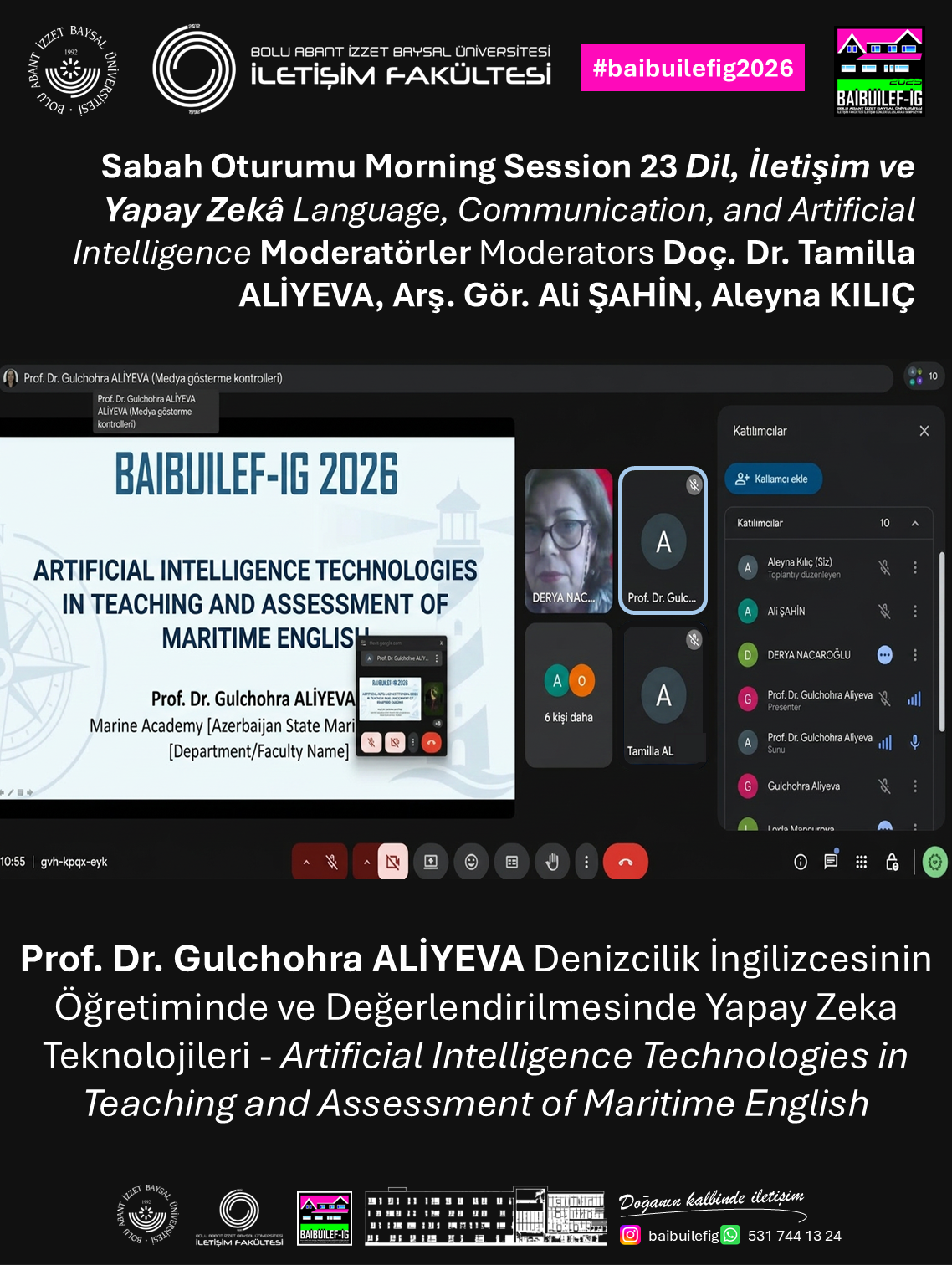
The first presentation of the session was given by Prof. Dr. Gulchohra Aliyeva presented her study titled “Artificial Intelligence Technologies in Maritime English Teaching and Assessment.” The presentation addressed the contributions of AI-based applications to foreign language teaching, particularly in specialized fields, and the development of language skills. Digital tools used in Maritime English education, personalized learning models, and the innovative possibilities offered by AI in assessment processes were shared with the participants.
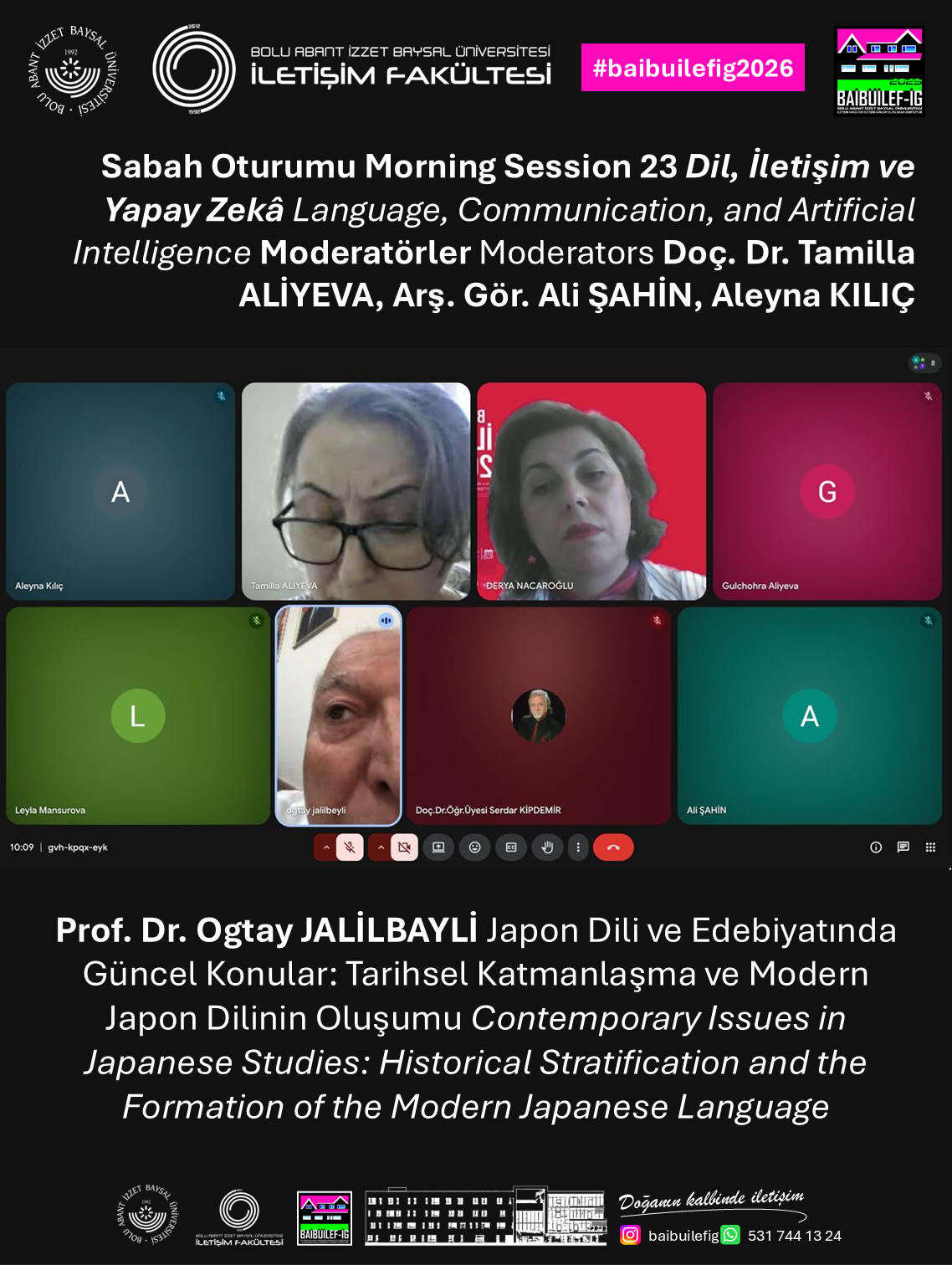
In the presentation titled “Contemporary Issues in Japanese Studies and the Formation of Modern Japanese,” Prof. Dr. Ogtay Jalilbayli discussed the historical development of the Japanese language and the fundamental research problems encountered in Japanology today. The presentation examined the cultural, historical, and linguistic layers that influenced the formation of modern Japanese, while also evaluating the effects of globalization on the language.
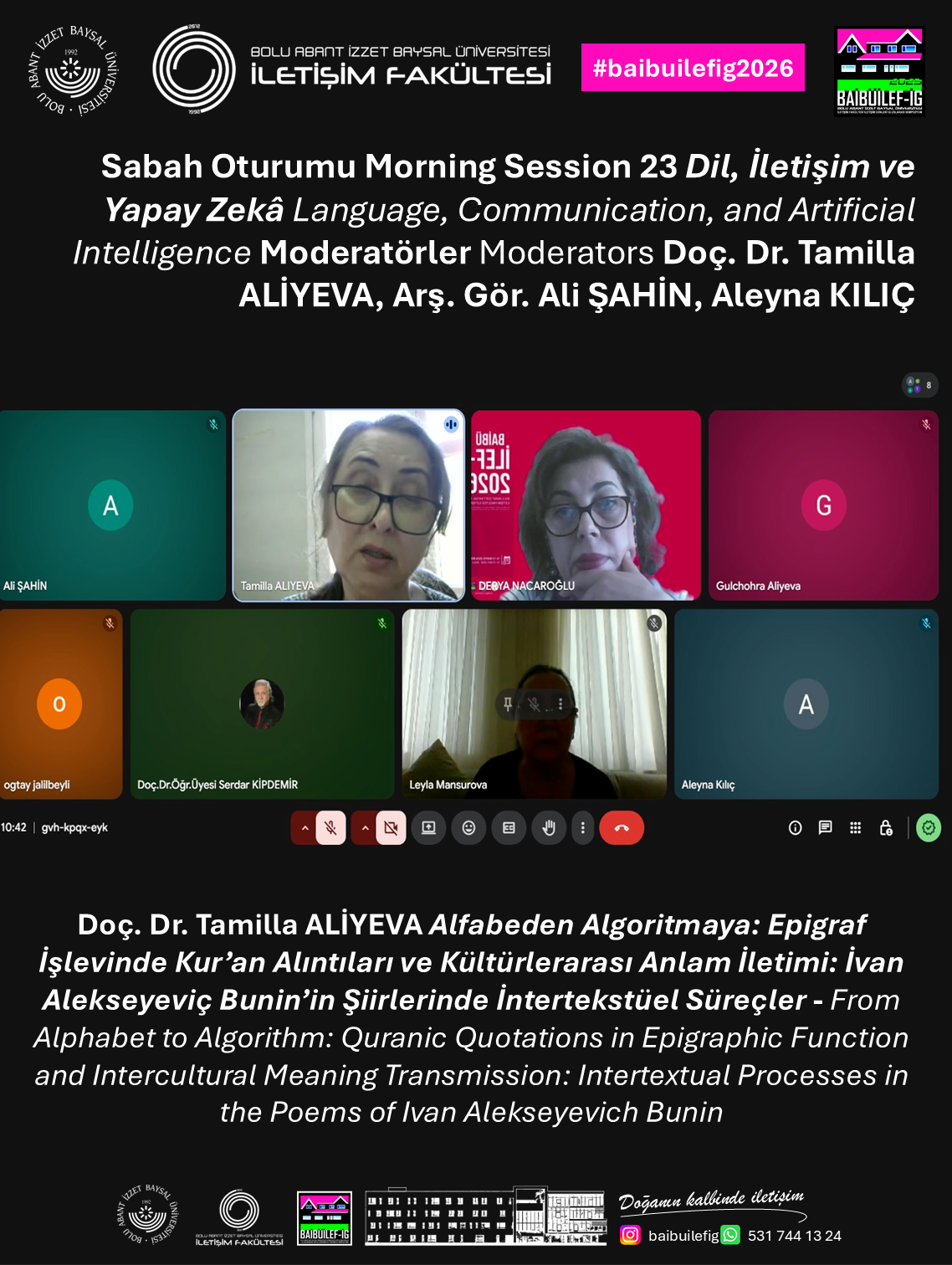
Assoc. Prof. Dr. Tamilla Aliyeva, in her presentation titled “The Epigraphic Function of Quranic Quotations and Intertextual Processes in Bunin’s Poems,” presented an interdisciplinary research bringing together literature, culture, and language studies. The presentation examined Quranic references in the poems of the Russian poet and writer Ivan Alekseyevich Bunin, evaluating intertextual processes and cross-cultural meaning transfer. The study highlighted the reflections of interactions between different cultural and religious texts in literary production.
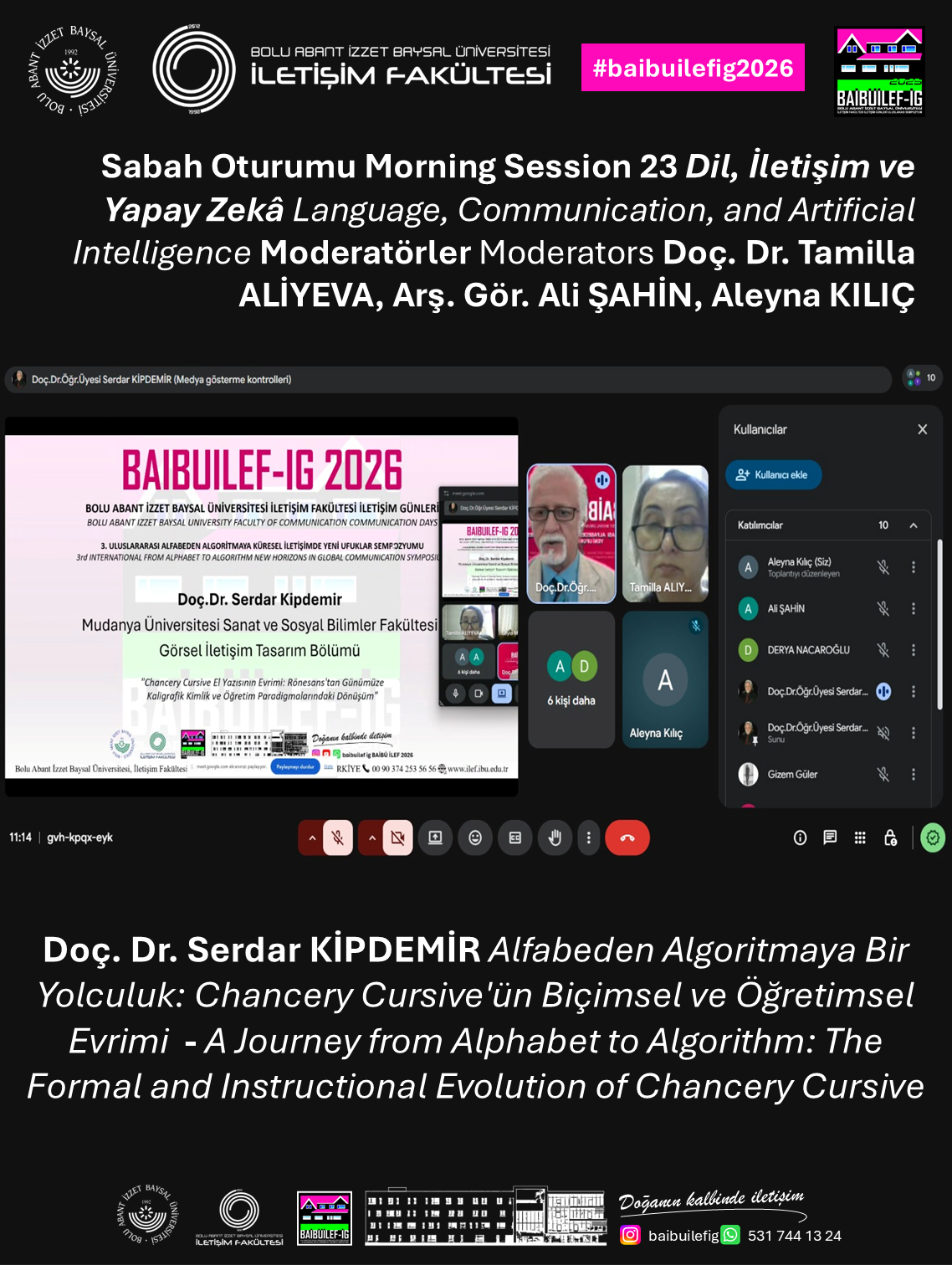
Associate Professor Dr. Serdar Kipdemir’s presentation, “From Alphabet to Algorithm: The Formal and Instructional Evolution of Chancery Cursive Writing,” addressed the transformation of historical writing systems in the context of digitalization. Examining the changes Chancery Cursive writing has undergone from its inception to the present day, the study evaluated its aesthetic and pedagogical aspects, as well as its reinterpretations in the digital age. The presentation was noteworthy for revealing the relationship between traditional writing culture and contemporary technologies.
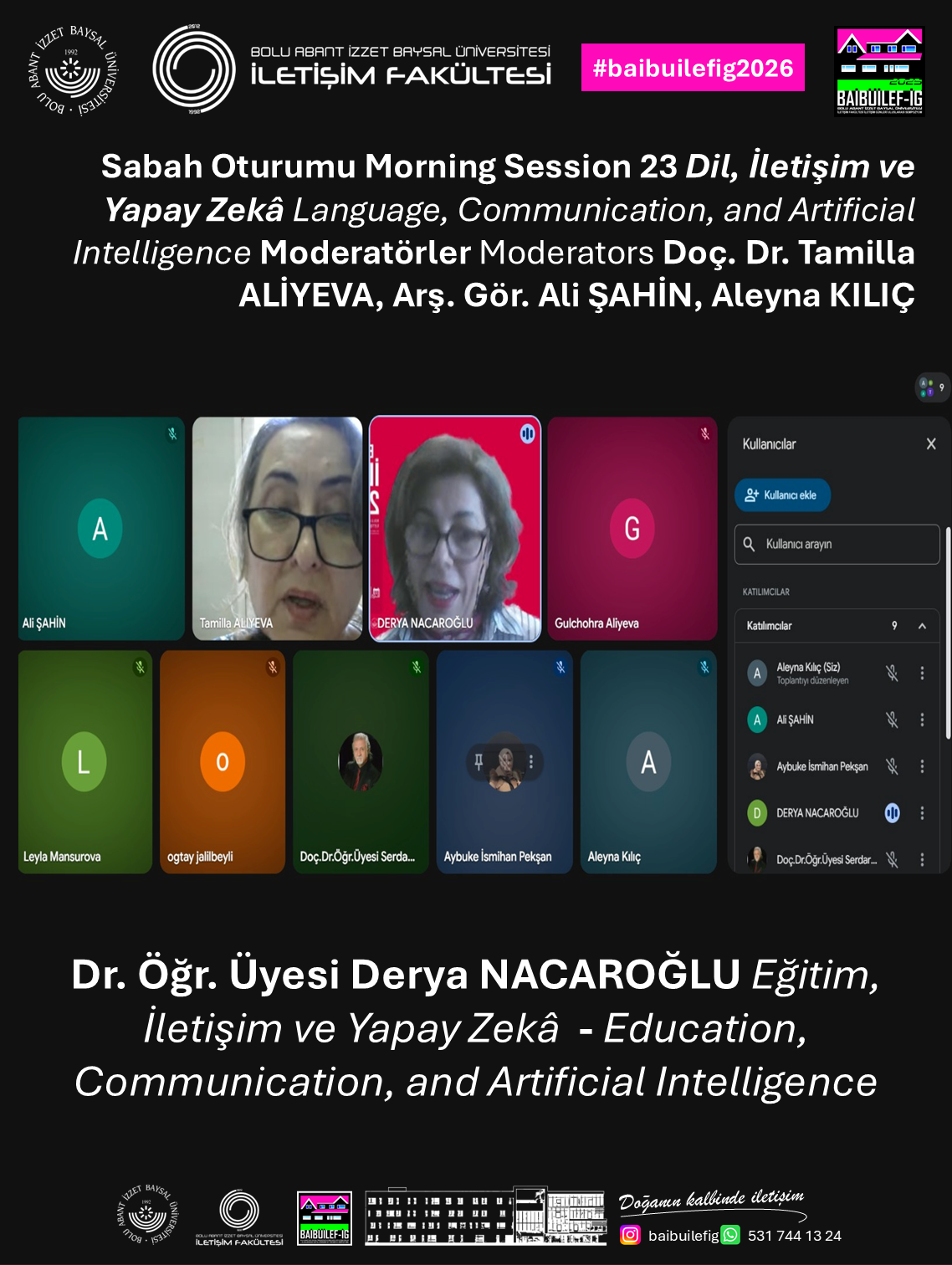
The final presentation of the session was by Dr. Lecturer Derya Nacaroğlu, in her presentation titled “Education, Communication, and Artificial Intelligence,” addressed the transformation created by artificial intelligence technologies in the fields of education and communication. The presentation included assessments of AI-supported learning environments, digital communication processes, and the future of educational technologies. Furthermore, the opportunities created by technological advancements in teaching and learning processes, along with the ethical and pedagogical responsibilities they bring, were discussed.
The presentations throughout the session demonstrated that artificial intelligence is not merely a technical innovation, but also a transformative element that creates new research perspectives in the fields of language, culture, education, and communication. Following the presentations, participants had the opportunity to exchange views with researchers during the question-and-answer session, evaluating current developments in AI-supported language studies, educational technologies, and intercultural communication.
The “Language, Communication, and Artificial Intelligence” session, organized within the scope of BAİBÜ İLEF-İG 2026, hosted important discussions across a broad academic framework, ranging from linguistics and educational technologies to literary research and AI applications. The session once again highlighted the importance of interdisciplinary approaches, offering new perspectives on the future of language and communication studies in the age of artificial intelligence and making significant contributions to the scientific richness of the symposium.