02 Haziran 2026 Salı
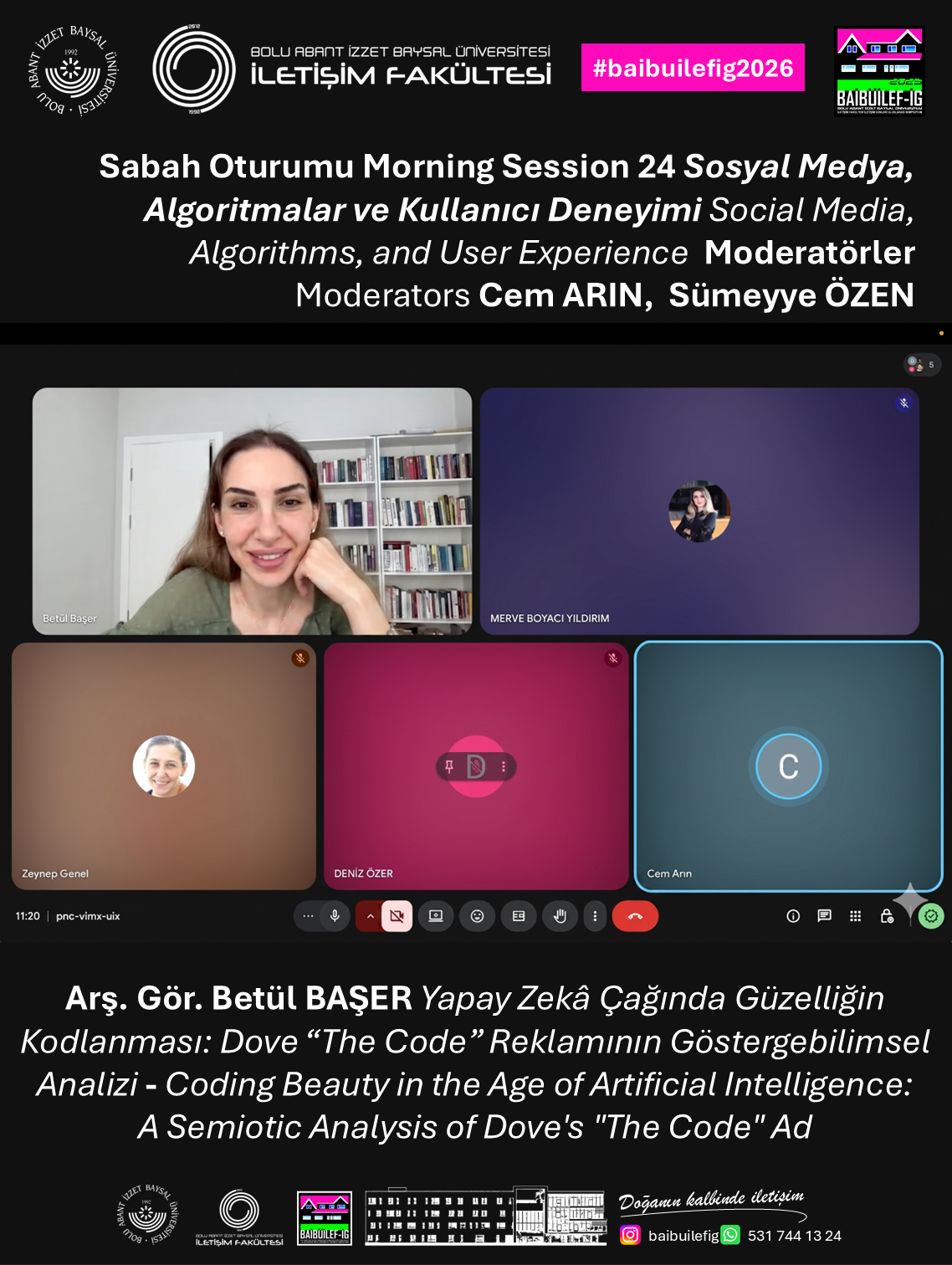
The "Social Media, Algorithms and User Experience" session, held as part of the BAİBÜ İLEF-İG 2026 – 3rd International Communication, Artificial Intelligence and Hypermedia Symposium organized by the Faculty of Communication at Bolu Abant İzzet Baysal University, addressed the effects of digital platforms on individuals and society from various perspectives. Moderated by Cem Arın and Sümeyye Özen, the session evaluated current topics such as sustainability communication, algorithmic guidance, digital fatigue, AI influencers, and representations of beauty in the age of AI from an academic perspective.
In today's world, where digital platforms have become an integral part of daily life, the effects of algorithms shaping user experiences, the transformation of social media culture, and the reflections of artificial intelligence technologies in the field of communication formed the main discussion topics of the session. Researchers shared new trends emerging in the digital ecosystem with the participants through current examples and academic studies.
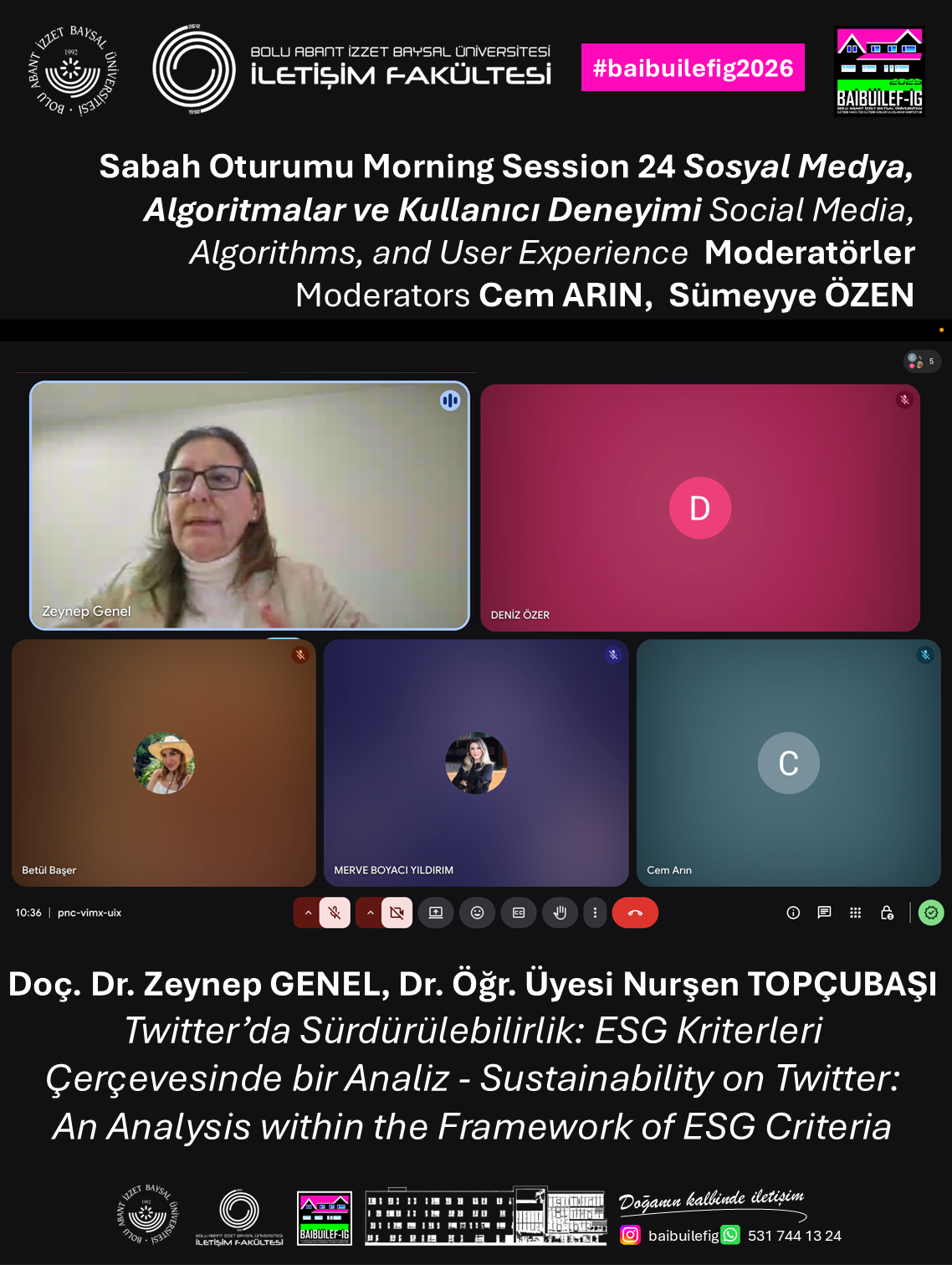
The first presentation of the session was given by Assoc. Prof. Dr. Zeynep Genel and Dr. Öğr. Faculty member Nurşen Topçubaşı presented her study titled “Sustainability on Twitter: An Analysis within the Framework of ESG Criteria.” The research examined how the issue of sustainability is addressed on social media platforms and the reflections of discourses created within the context of environmental, social, and governance (ESG) criteria in the digital public sphere. The presentation evaluated the role of social media in increasing sustainability awareness and its effects on corporate communication strategies.
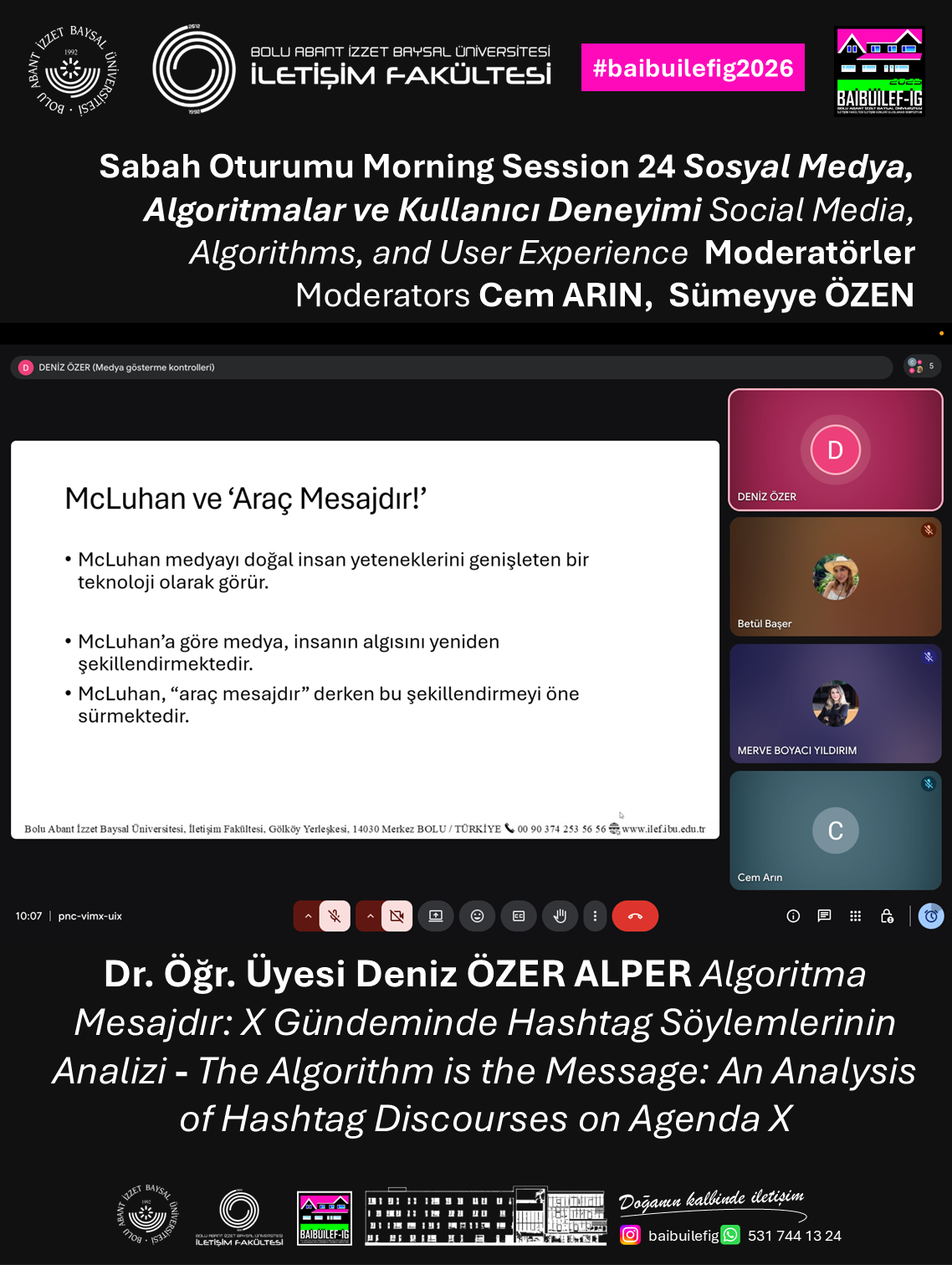
In the presentation titled “Algorithm is Message: Analysis of Hashtag Discourses in the X Agenda” by Dr. Deniz Özer Alper, the impact of algorithms on agenda-setting processes on digital platforms was discussed. The analysis, conducted through hashtag usage, evaluated the role of algorithmic systems in determining which content will be visible and the effects of this on public discussions. The presentation highlighted that social media algorithms shape not only content distribution but also meaning-making processes.
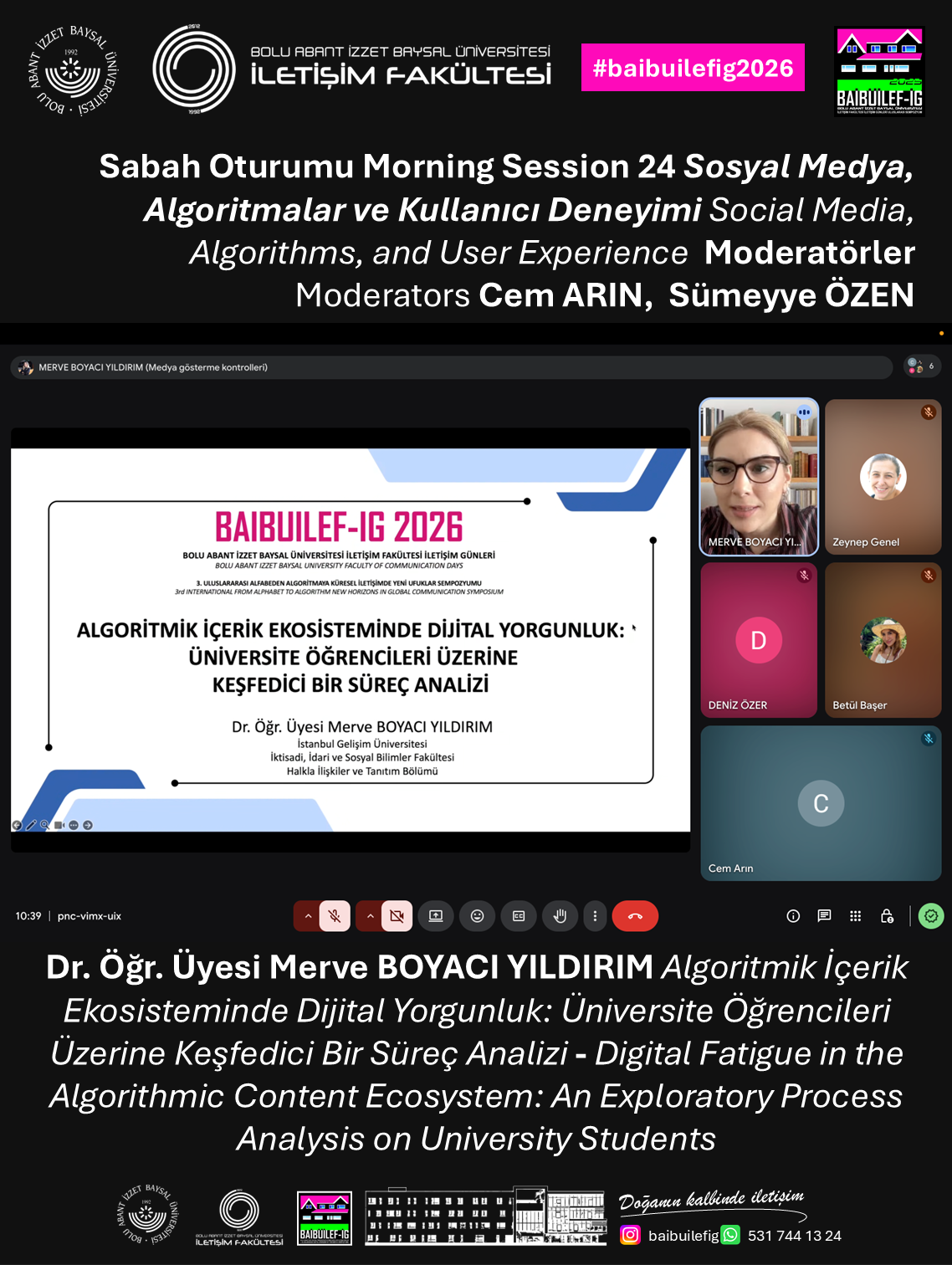
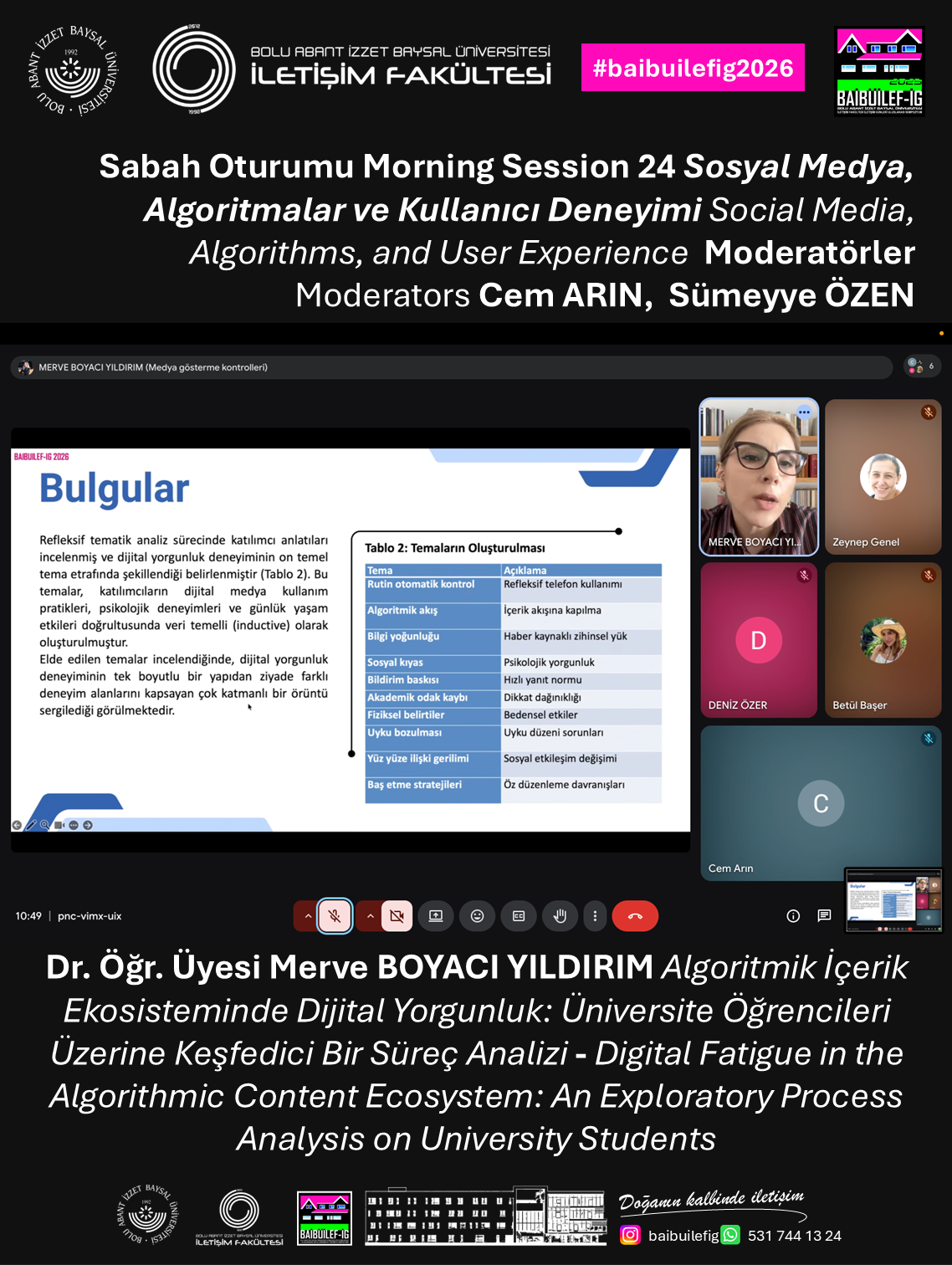
Another presentation in the session was by Dr. Faculty member Merve Boyacı Yıldırım shared her research titled “Digital Fatigue in the Algorithmic Content Ecosystem: An Exploratory Process Analysis on University Students.” The study examined the psychological and behavioral effects of constant content flow and digitally personalized environments driven by algorithms on users. Specifically, the phenomenon of digital fatigue was evaluated through the social media usage habits of university students, and the effects of intense digital exposure on user experience were discussed.
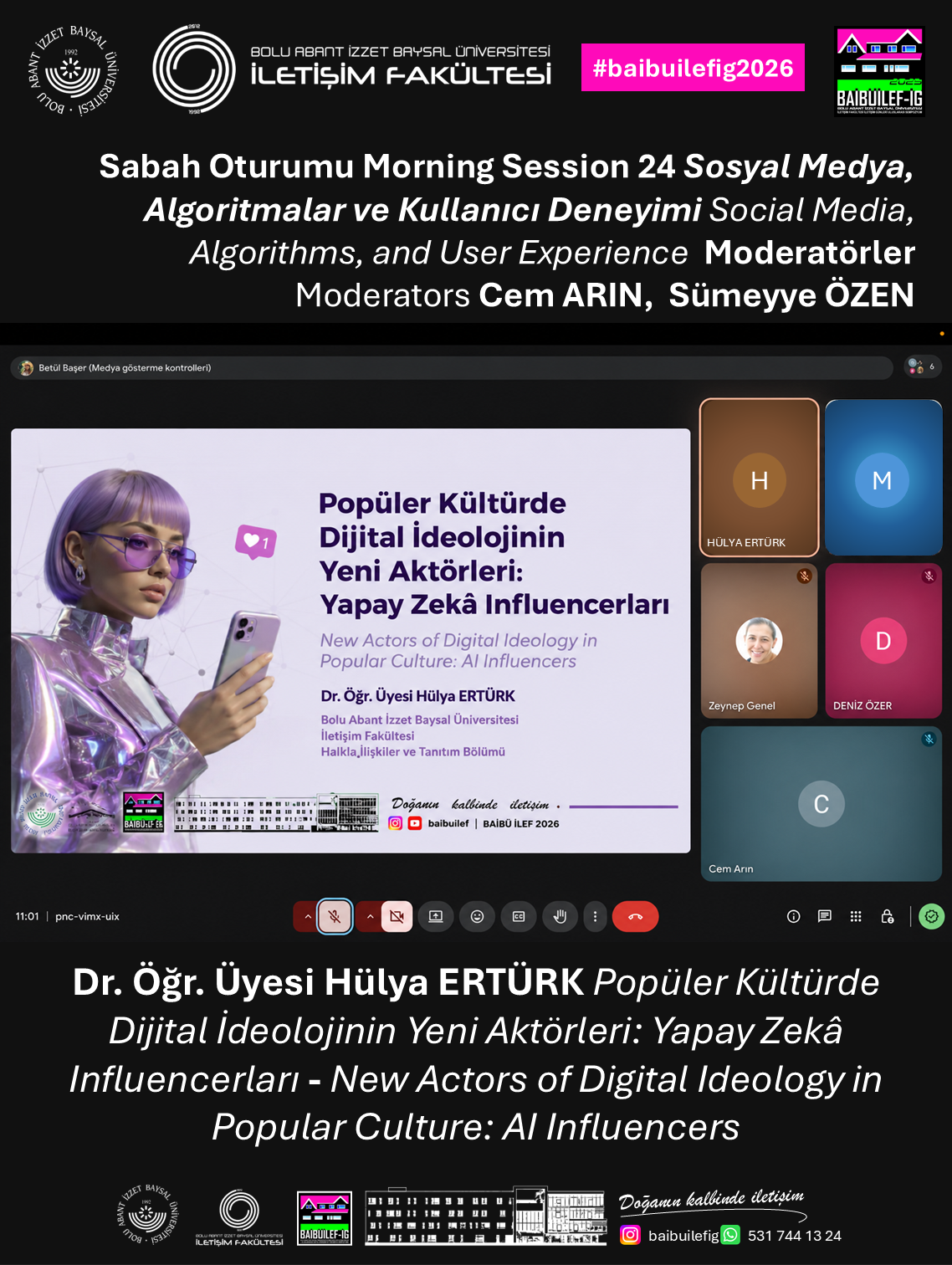
The study presented by Dr. Hülya Ertürk, titled “New Actors of Digital Ideology in Popular Culture: AI Influencers,” was one of the session's noteworthy presentations. The presentation addressed the rise of AI-generated virtual influencers in digital culture, their relationships with users, and their impact on popular culture. It evaluated how AI influencers transform the concepts of representation, trust, and interaction in new media environments where the boundaries between humans and machines are increasingly blurred.
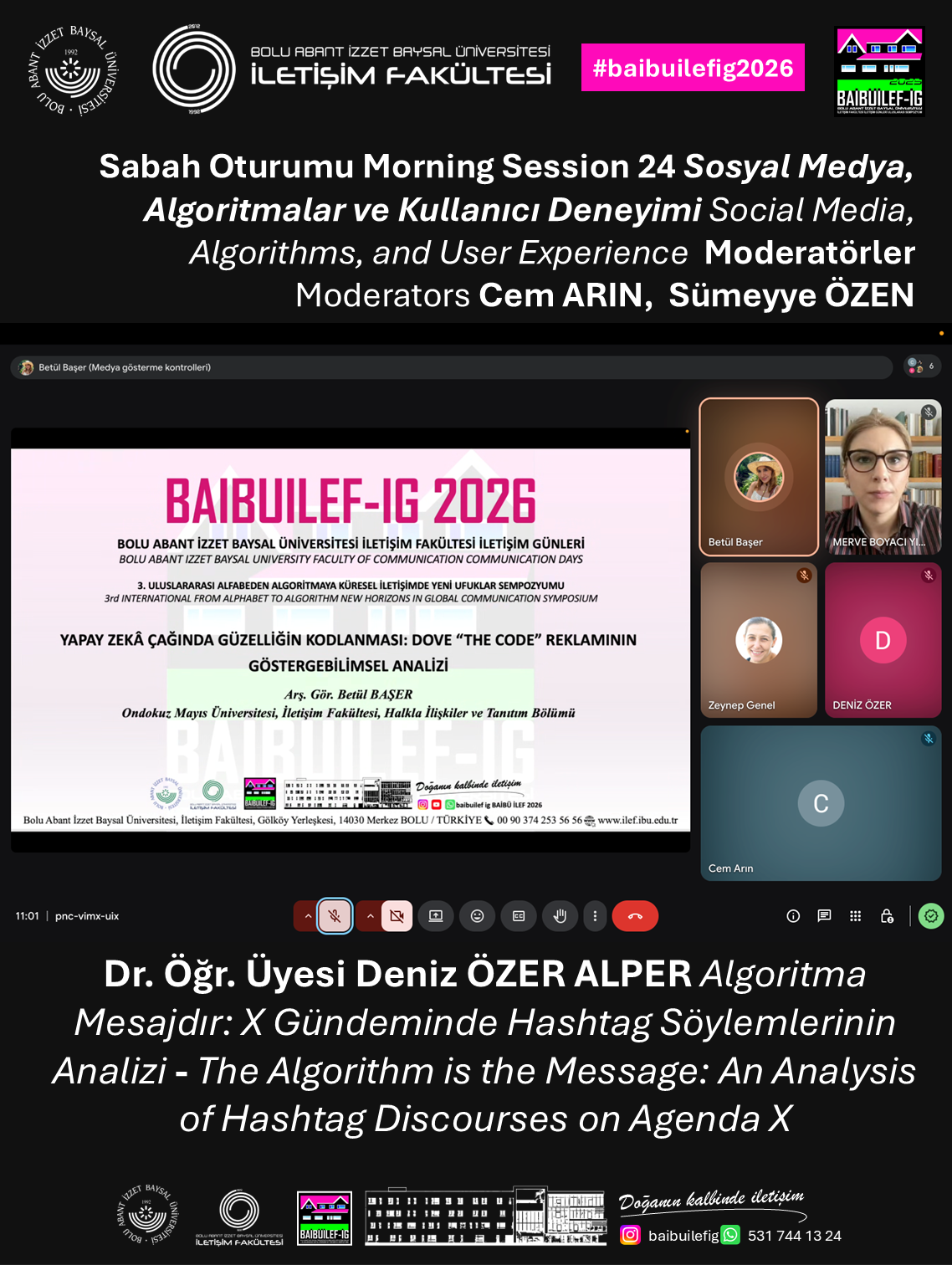
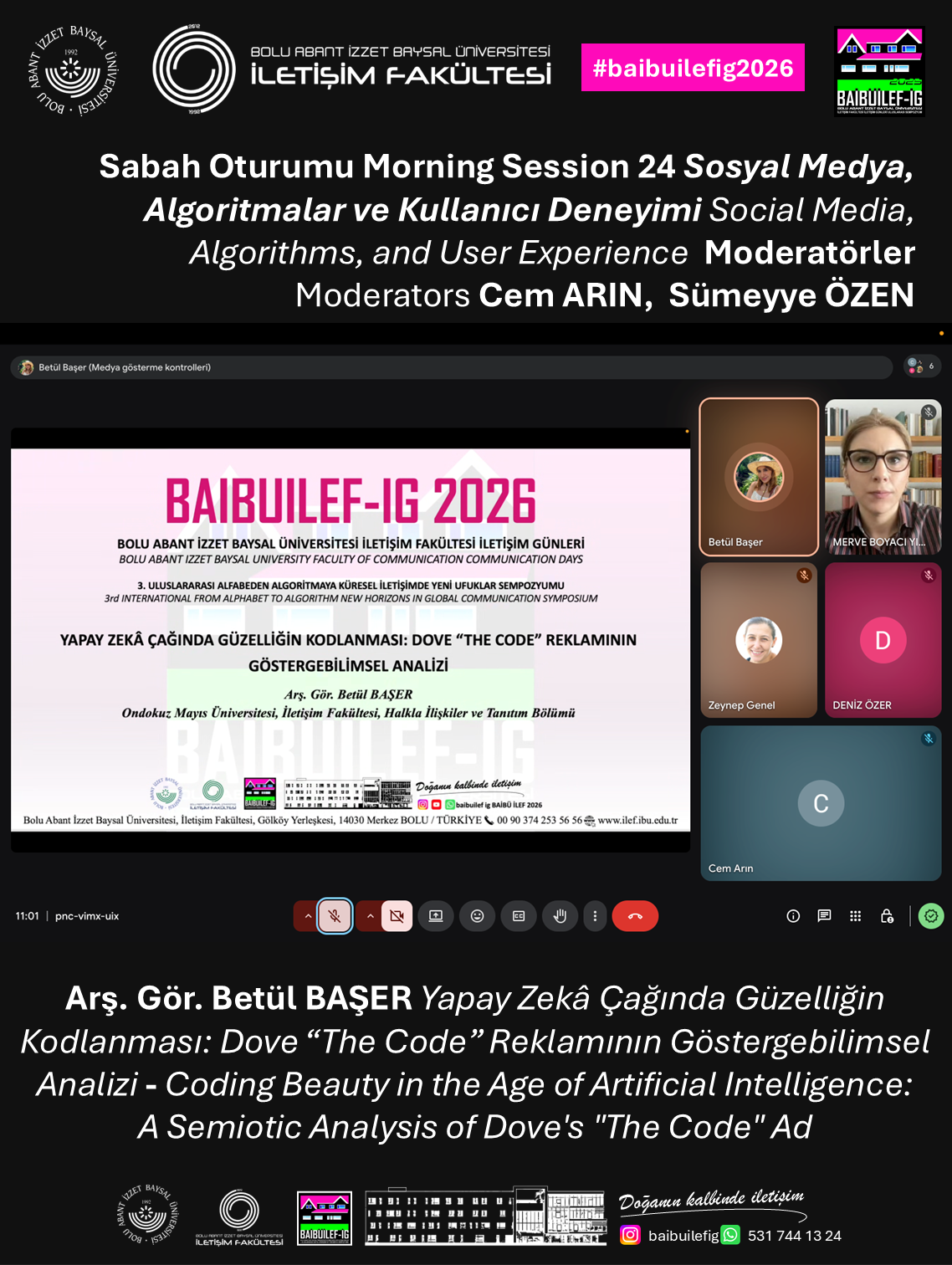
Research Assistant Betül Başer, in her presentation titled “Coding Beauty in the Age of Artificial Intelligence: A Semiotic Analysis of Dove’s ‘The Code’ Ad,” focused on the relationship between advertising, artificial intelligence, and societal perceptions of beauty. The study examined how artificial intelligence systems reproduce beauty standards and the resulting representational problems through a semiotic approach, using Dove’s “The Code” campaign as an example. The presentation offered important insights into the impact of artificial intelligence technologies on societal norms and cultural codes.
Throughout the session, presentations revealed that social media platforms have become more than just communication tools; they have become powerful ecosystems shaping user behavior, cultural practices, and societal perceptions. Topics such as the impact of algorithms on visibility mechanisms, AI-powered content production, digital well-being, and user experience were addressed from various research perspectives.
Following the presentations, a question-and-answer session allowed participants to exchange views on the future of social media platforms, the transparency of algorithmic systems, methods for combating digital fatigue, and the impact of artificial intelligence technologies on communication.
The “Social Media, Algorithms and User Experience” session, held within the scope of BAİBÜ İLEF-İG 2026, made significant contributions to the scientific discussion environment of the symposium by evaluating the effects of digital transformation on individuals and society from an interdisciplinary perspective. The session focused on social media studies, user experience research, and AI-focused communication.