02 Haziran 2026 Salı
The Morning Session 25, titled “Media, Representation and Cultural Meaning-Making,” held within the scope of the BAİBÜİLEF-İG 2026 – 3rd International Symposium on New Horizons in Global Communication from Alphabet to Algorithm, organized by the Faculty of Communication at Bolu Abant İzzet Baysal University, hosted important discussions within a broad academic framework ranging from media studies to cultural heritage research, from digital culture to individual narratives. Moderated by Assoc. Prof. Dr. Ahmet Tuncay Erdem and Onay Bozcu, the session addressed the processes of cultural meaning-making and the role of media in these processes from different perspectives.
The studies presented in the session were evaluated across a wide spectrum, from the social visibility of individual life stories to the representation of cultural heritage through media, from the examination of historical cultural environments to new visual narrative forms emerging in the digital age. Participants had the opportunity to listen to current research on how the relationship between media and culture is being reshaped today.
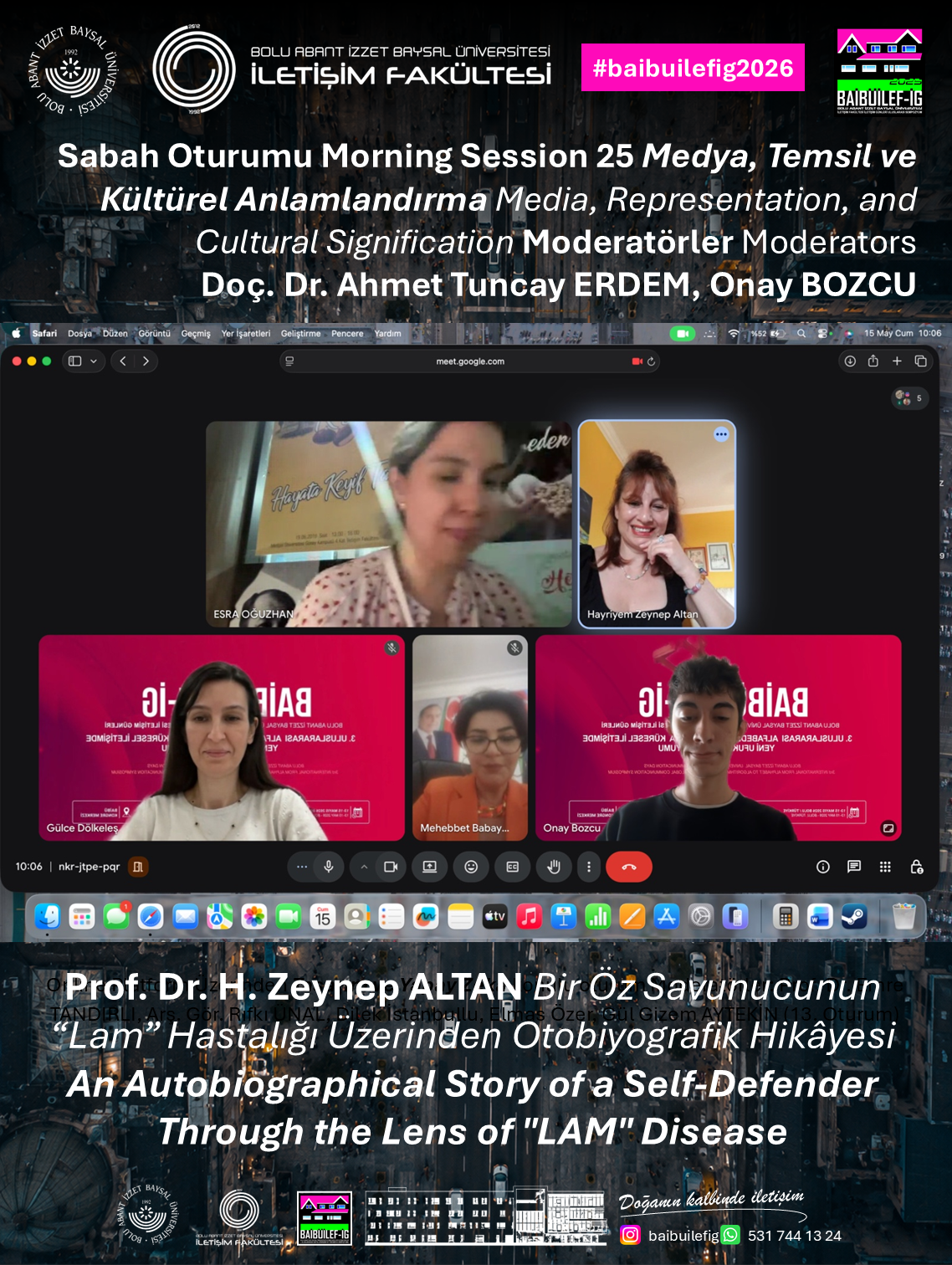
The first presentation of the session was given by Prof. Dr. H. Zeynep Altan presented her study titled “An Autobiographical Story of a Self-Advocate Through ‘LAM’ Disease.” The presentation addressed how the experience of a rare disease is made visible through individual narratives and the importance of the concept of self-advocacy in the context of health communication. The role of individual life stories in raising social awareness and the processes of gaining public visibility through media were also discussed.
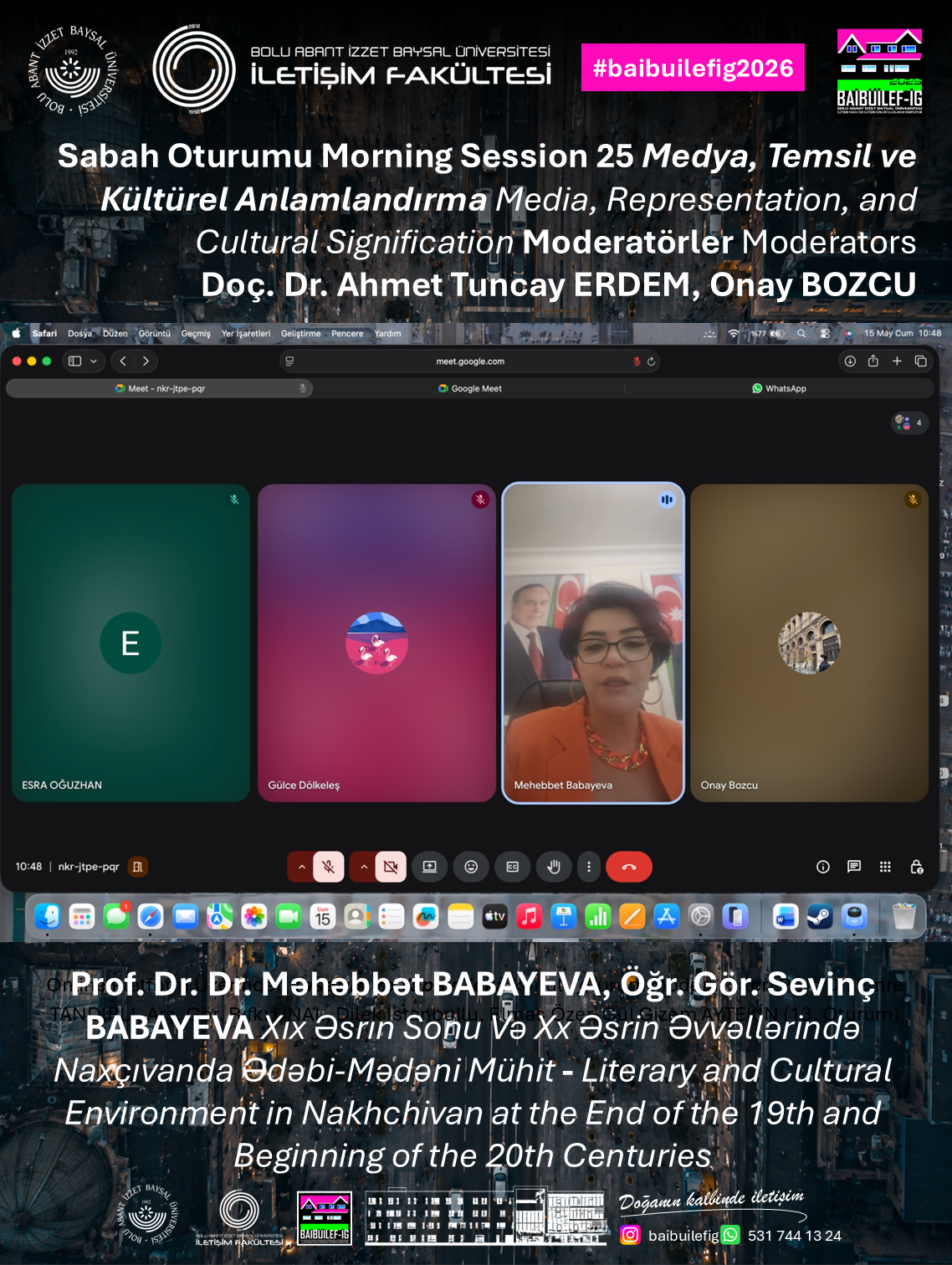
Prof. Dr. Məhəbbət Babayeva and Lecturer Sevinç Babayeva presented a study titled “The Literary-Cultural Environment in Nakhchivan at the End of the 19th and Beginning of the 20th Centuries,” examining the historical and cultural development process of the Nakhchivan region. The study discussed the literary production, cultural interactions, and intellectual accumulation of the period, sharing important turning points in the region's cultural history with the participants.
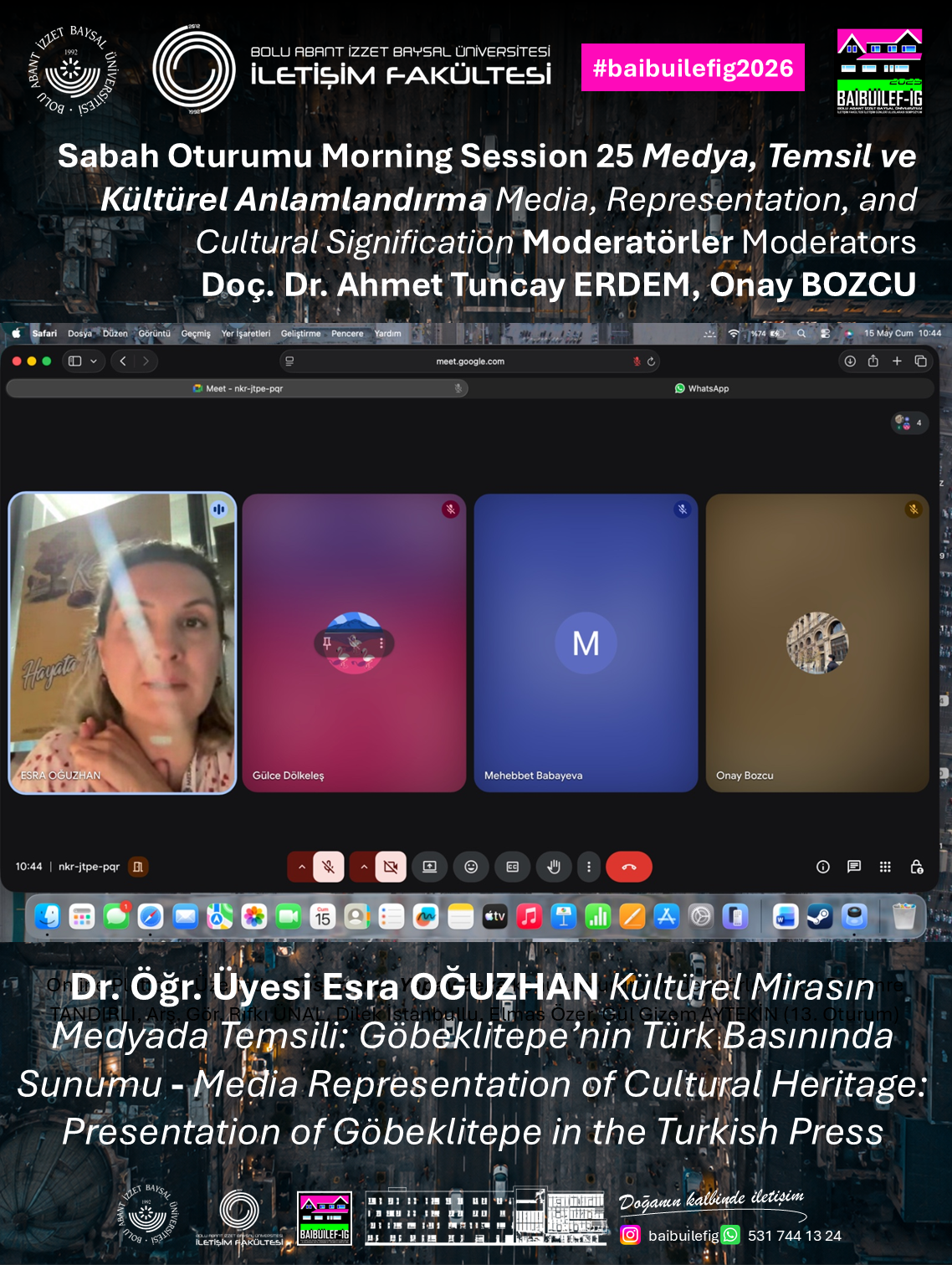
Dr. Öğr. In her presentation titled “Representation of Cultural Heritage in the Media: The Presentation of Göbeklitepe in the Turkish Press,” faculty member Esra Oğuzhan evaluated the ways in which Göbeklitepe, considered one of the most important archaeological discoveries in human history, is represented in media discourse. The analysis, conducted through news and content in the Turkish press, examined how cultural heritage is interpreted and presented to the public through the media. The presentation highlighted the importance of the relationship between media and cultural heritage.
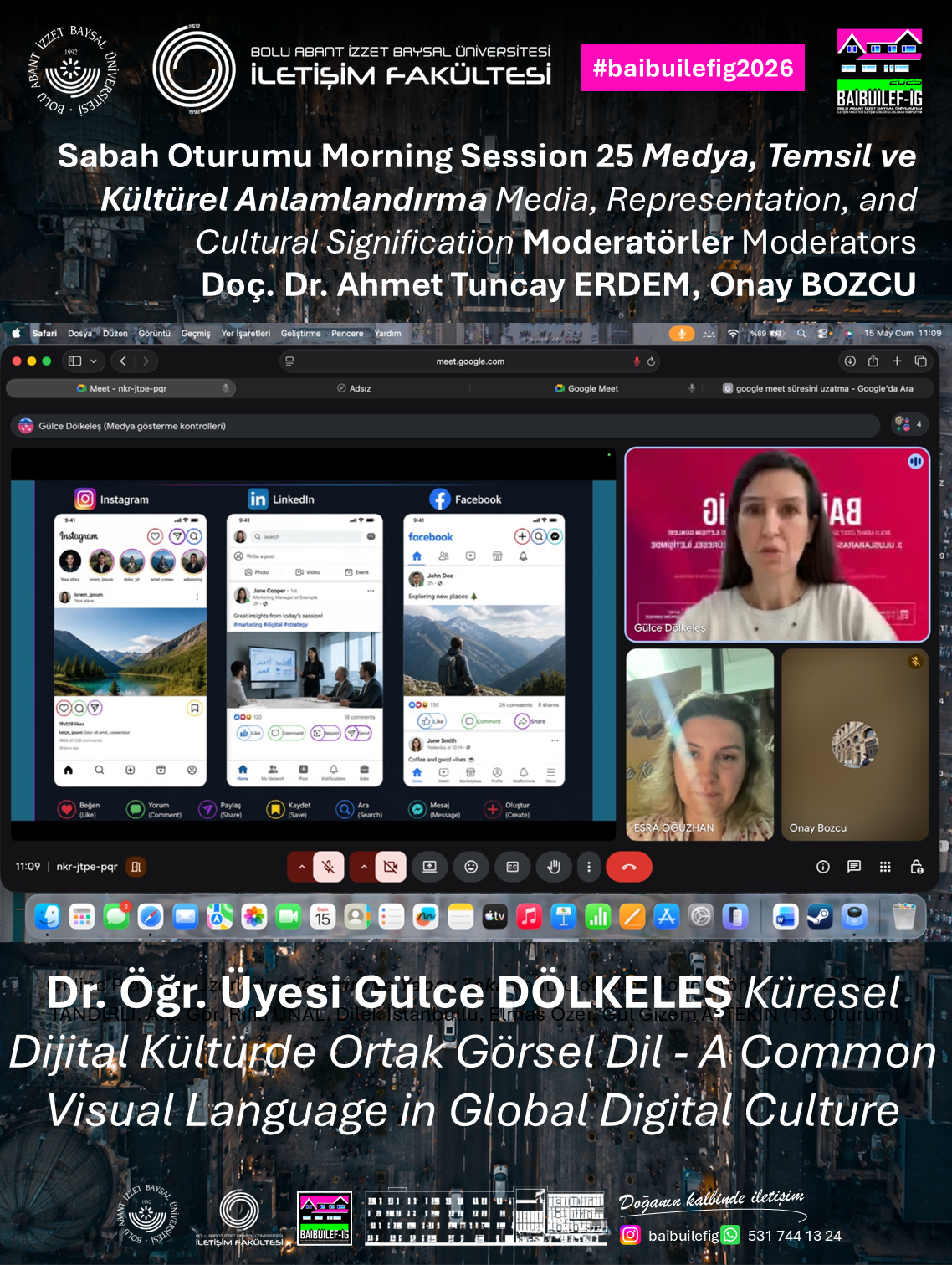
In another presentation of the session, Dr. Gülce Dölkeleş shared her work titled “A Common Visual Language in Global Digital Culture” with the participants. The presentation addressed the common communication language formed by visual narratives and symbols circulating globally through digital platforms. The visual codes of digital culture were evaluated in the context of users' content production and consumption habits and intercultural interaction processes.
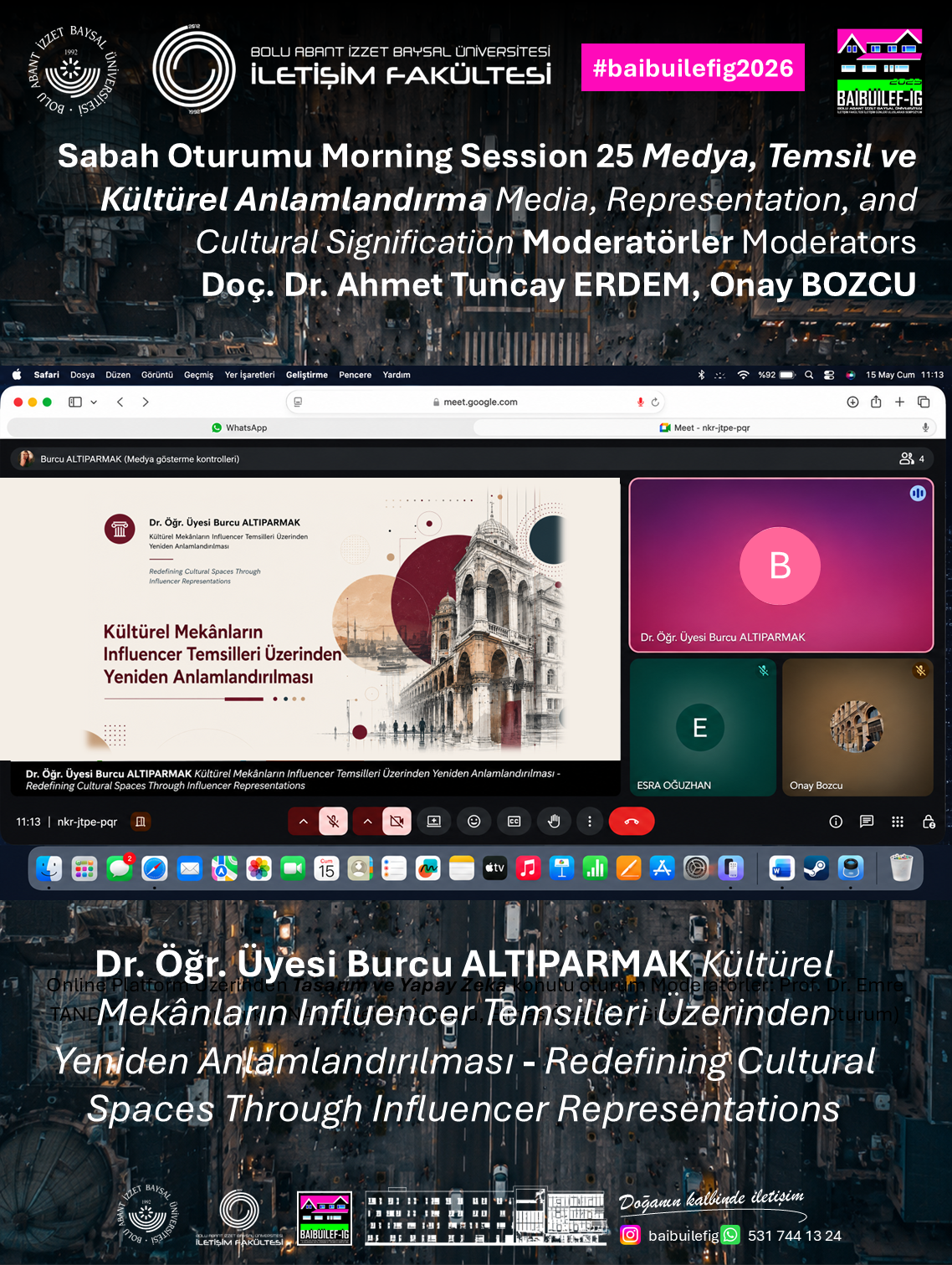
The final presentation of the session was by Dr. Öğr. Member Burcu Altıparmak presented her research titled “Reinterpreting Cultural Spaces Through Influencer Representations.” The study examined how social media influencers represent cultural spaces and how these representational processes transform the perception of these spaces. The impact of digital content creators on cultural heritage sites and touristic locations was evaluated, and comprehensive analyses of the role of social media in the production of cultural meaning were shared.
The presentations throughout the session revealed that media is not merely a tool for transmitting information; it is also a significant space for meaning-making that plays an active role in the reproduction of cultural values, social memory, and identities. Bringing together researchers from different disciplines, the session facilitated fruitful academic discussions on the historical, social, and digital dimensions of cultural representations.
Following the presentations, a question-and-answer session allowed participants to exchange views on media representations, digital culture, the visibility of cultural heritage, and new forms of meaning-making created through social media.
The “Media, Representation and Cultural Meaning-Making” session, organized within the scope of BAİBÜ İLEF-İG 2026, brought together current research on media and culture studies, making a significant contribution to the scientific diversity of the symposium. The session opened up a discussion on the processes of representation and meaning production from a broad perspective, ranging from cultural heritage to digital platforms, providing participants with an interdisciplinary framework for evaluation.