02 Haziran 2026 Salı
The Morning Session 26, titled “Advertising, Ethics and Consumer Culture,” held within the scope of the BAİBÜİLEF-İG 2026 – 3rd International Symposium on New Horizons in Global Communication from Alphabet to Algorithm, organized by the Faculty of Communication at Bolu Abant İzzet Baysal University, addressed the digital transformation in the advertising and media fields from ethical, technological, and social perspectives. Moderated by Dr. M. Rıfkı Ünal and Sümeyye Özen, the session shared current academic studies on the effects of artificial intelligence applications on the advertising and publishing sector, changes in consumer culture, corporate communication strategies, and advertising ethics.
In a session held in a time when digital technologies are reshaping the media and advertising sectors, a wide range of topics were evaluated, from AI-powered content production and synthetic servers to the relationship between corporate brands and viral content and ethical debates. Participants had the opportunity to discuss new trends in advertising and communication from academic perspectives.
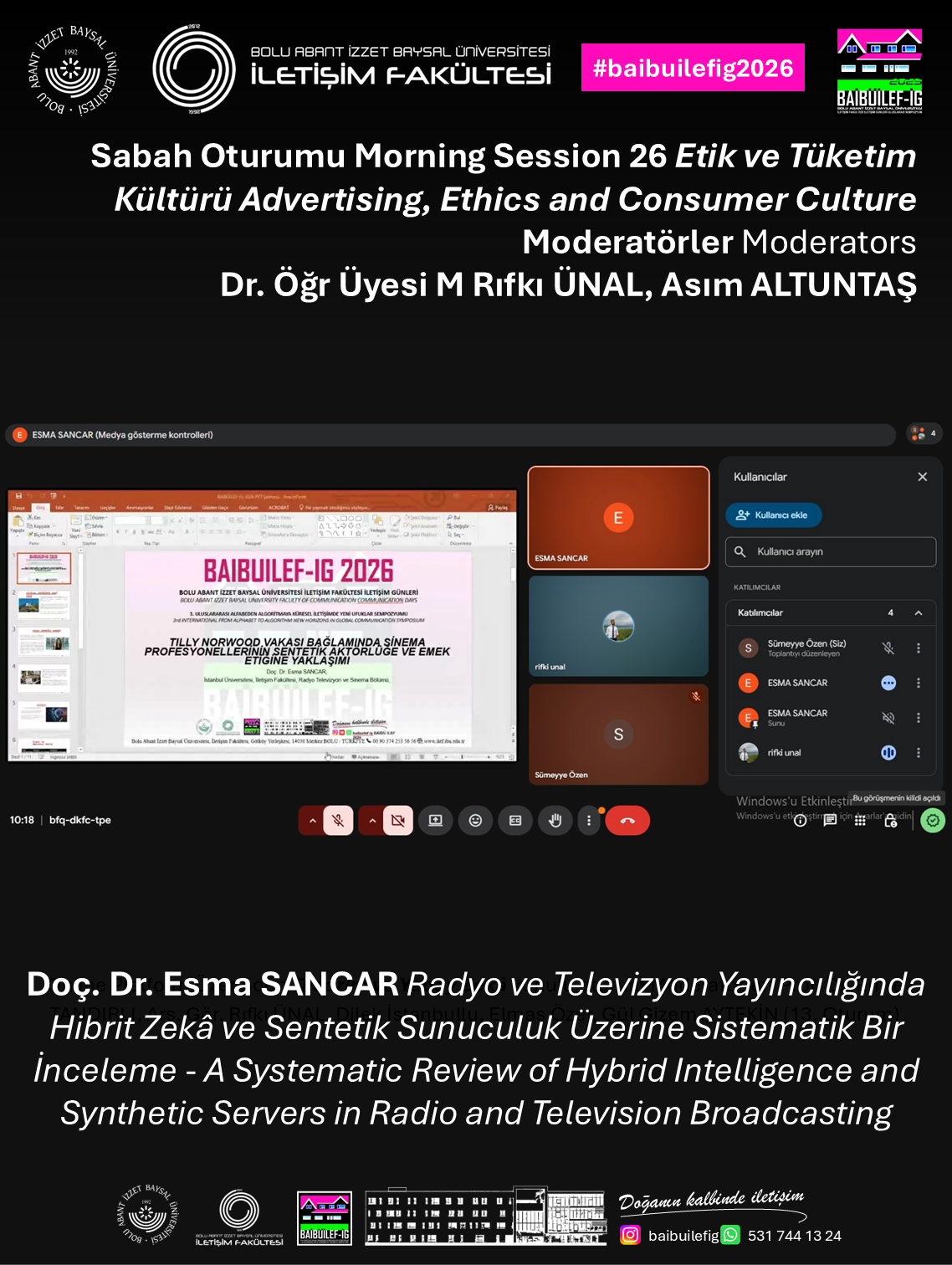
The first presentation of the session was given by Assoc. Dr. Esma Sancar presented her study titled “A Systematic Examination of Hybrid Intelligence and Synthetic Hosting in Radio and Television Broadcasting.” The presentation addressed the impact of the hybrid intelligence approach, which combines artificial intelligence technologies with human creativity, on the broadcasting sector. Specifically, the uses, advantages, and ethical debates of AI-powered synthetic hosts in radio and television broadcasting were evaluated. Important findings were shared regarding how the collaboration between humans and artificial intelligence will shape the future of the media sector.
In the presentation titled “Made By Human: AI Fatigue and the Discourse of Human-Made Production in Advertising,” given by Dr. Haluk Akarsu, the effects of the increasing prevalence of AI-powered content on consumer perception were examined. The study evaluated how the emphasis on “human-made content” has become a value element in advertising discourse following the intensive use of artificial intelligence. The presentation drew attention to the reinterpretation of the concepts of originality, creativity, and human labor in the face of technological advancements.
In another presentation of the session, Dr. Serhan Salepçigil shared his study titled “Digital Conscience and Action Gap: A Theoretical Model for Public Mobilization in NGO Communication.” The presentation addressed the difficulties individuals face in translating awareness of social issues into action, despite the creation of awareness on digital platforms. The dynamics of public mobilization in the digital age were evaluated through a theoretical model developed within the context of civil society organizations' communication strategies.
The study presented by Dr. Ali Çetinkaya, titled “Evaluation of Advertising from an Ethical Perspective: The Automotive Sector Example,” focused on the ethical dimension of advertising practices. Examining advertising strategies used in the automotive sector, the presentation emphasized the need to evaluate messages presented to consumers within the framework of ethical principles. Comprehensive analyses of sector practices were shared through the concepts of truthfulness, transparency, and social responsibility in advertising.
In the final presentation of the session, Research Assistant Gizem Güler presented her research titled “Corporate Ownership of Viral Content: An Evaluation of IKEA’s ‘Mother of Punch’ Sharing.” The study examined how viral content emerging in social media culture is reused by brands and integrated into corporate communication strategies. Using IKEA as an example, the evaluation addressed the relationship brands have with digital culture and the role of user-generated content in corporate communication.
The presentations throughout the session revealed that the advertising and media sectors are undergoing a significant transformation in line with artificial intelligence technologies, digital culture, and changing consumer expectations. The need to protect ethical values, maintain a human-centered communication approach, and accurately assess the societal impact of technological innovations were among the common themes highlighted throughout the session.
In the question-and-answer session following the presentations, participants exchanged views on the future of AI-powered advertising applications, ethical responsibility on digital platforms, corporate communication strategies, and transformations in consumer culture.
The “Advertising, Ethics and Consumer Culture” session, organized within the scope of BAİBÜ İLEF-İG 2026, made significant contributions to the scientific content of the symposium by evaluating current developments in the fields of advertising and communication from an interdisciplinary perspective. The session addressed the transforming nature of advertising in the digital age, ethical debates, and the future of consumer culture, creating a foundation for fruitful scientific discussions among academics and researchers.